If you’ve ever witnessed mutual grooming between cats and wondered why cats bathe each other, it’s actually a behavior called allogrooming. Allogrooming is a common and typically affectionate behavior between bonded cats.
by Rita Reimers, Certfied Cat Behaviorist

When Grooming Between Cats Raises Questions
Mutual grooming is usually a positive social behavior, but the licking itself does not tell the whole story. Is one cat comfortable while the other seems persistent? Does grooming turn into biting, chasing, or an attempt to get away? Understanding these interactions requires looking at the cats’ body language, their history together, and the dynamics of your household.
As a certified cat behaviorist, I help cat guardians make sense of these sometimes confusing interactions and develop a plan tailored to their cats. If you are unsure what is happening between your cats, explore my cat behavior consultations.
What is Mutual Grooming (Allogrooming)?

Cats are naturally clean creatures, and grooming is an essential part of their daily routine. Mutual grooming involves one cat licking another, often on hard-to-reach areas like the head, neck, and face.
It’s a social bonding ritual, seen frequently between littermates, bonded pairs, or cats who have established trust with one another. This behavior releases endorphins, reduces stress, and helps build positive relationships.
In most cases, mutual grooming is a sign of harmony and trust. But context matters. Who initiates the grooming, how the other cat responds, and what happens next can tell us much more about their relationship than licking alone. When the interaction seems one-sided or turns tense, understanding the bigger picture can help you determine what is really going on between your cats.
The Dominance Connection
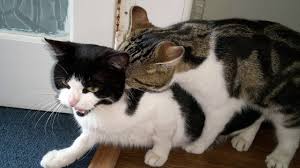
Cats are often thought of as solitary creatures, but they are capable of forming complex social relationships.
In multi-cat households, those relationships can involve subtle differences in confidence, access to resources, and how cats interact with one another.
Mutual grooming can sometimes be part of those dynamics, particularly when one cat appears to control the interaction.
Here are some behaviors worth paying attention to:
- Who Initiates the Grooming?
Does one cat consistently initiate grooming while the other rarely reciprocates? This doesn’t automatically indicate dominance, but it can be an important clue when considered alongside their other interactions. - How Does the Groomed Cat Respond?
Watch for changes in body language. Does the receiving cat appear relaxed, or does it become tense, flatten its ears, attempt to leave, or get physically restrained? Grooming that turns into biting or chasing deserves a closer look. - What Happens Outside Grooming Sessions?
The relationship between your cats doesn’t begin and end with grooming. Their interactions around food, resting places, territory, and attention can provide valuable clues about the dynamics between them.
The important thing to remember is that no single behavior tells the whole story. What looks like dominance may involve tension, overstimulation, or other factors that aren’t immediately obvious. Understanding the relationship requires looking at the cats, their history, and their environment together.
Not sure what’s happening between your cats?
Grooming can be affectionate, but when one cat seems uncomfortable or the interaction turns tense, the licking alone may not tell you what’s going on.
As a certified cat behaviorist, I can help you understand these interactions and develop a plan tailored to your cats. You don’t have to keep guessing about what’s happening in your own home.
Explore cat behavior consultations for personalized guidance.
Why Does Dominant Grooming Between Cats Happen?
Grooming between cats isn’t always about affection, but it isn’t necessarily about establishing dominance, either. Sometimes, what appears to be dominant grooming is influenced by stress, excitement, changing relationships, or differences in how individual cats communicate.
Several factors may contribute to these interactions:
- Stress or Changes in the Environment: Introducing a new pet, moving, or even changing household routines can affect how cats interact. Grooming that was once peaceful may become tense when a cat feels unsettled.
- Social Relationships and Boundaries: Cats develop individual relationships with their housemates. One cat may be more assertive, while another is more tolerant. These differences can influence who initiates grooming and how the interaction unfolds.
- Overstimulation: A grooming session that begins peacefully can sometimes turn into biting or swatting when one cat becomes overstimulated or no longer welcomes the attention.
- Mimicking Kitten Behavior: Mother cats groom their kittens to clean and comfort them. Some adult grooming interactions may resemble this familiar caregiving behavior, although that doesn’t necessarily mean the grooming cat is assuming a parental or dominant role.
The challenge is determining what’s motivating the behavior in your particular household. Two cats displaying seemingly identical grooming patterns may be communicating very different things. Their personalities, history together, and overall relationship all influence what those interactions mean.
When to Intervene

Not every grooming session that ends with a swat, nip, or hiss is cause for alarm. Cats have their own ways of communicating boundaries, and sometimes one cat simply needs to tell the other, “That’s enough!”
The important thing is what happens next.
If the grooming stops and both cats comfortably go about their business, there may be no reason to intervene. However, when one cat repeatedly ignores the other’s signals, prevents them from leaving, or pursues them after they’ve tried to disengage, the situation deserves closer attention.
Watch for patterns that suggest the relationship is becoming strained:
- Repeated Escalation: Grooming frequently turns into biting, chasing, or confrontations that neither cat can easily disengage from.
- Avoidance or Fear: One cat begins hiding, avoiding shared spaces, or appearing uncomfortable whenever the other approaches.
- Changes in Everyday Behavior: Tension begins affecting eating, resting, litter box habits, or the cats’ willingness to occupy the same areas of the home.
These behaviors don’t necessarily mean your cats cannot get along. They may indicate that something in their relationship or environment needs attention.
The earlier you recognize a developing pattern, the easier it may be to address before the tension becomes an established part of daily life. If you’re regularly wondering whether to step in or let your cats work things out, a professional assessment can help you understand what’s happening and determine the appropriate next steps.
Final Thoughts on Grooming Between Cats: Balance is Key
Mutual grooming is often one of the sweetest and most heartwarming aspects of a multi-cat household. But as with any cat behavior, it’s important to look beyond the licking itself and consider how both cats feel about the interaction.
When grooming becomes tense, one-sided, or frequently ends in conflict, it may be a sign that something in the relationship needs attention. What appears to be a simple disagreement can sometimes reflect underlying stress, competition, or unresolved tension between housemates.
Understanding why your cats behave the way they do is the first step toward creating a more harmonious household. If you’re unsure whether their grooming is affectionate or becoming a source of conflict, professional guidance can help you identify what’s happening before the relationship deteriorates.
So the next time you see your cats locked in a grooming session, take a closer look. Is it love? Is it dominance? Or maybe it’s just one cat saying, “You missed a spot!”