Disciplining cats rarely stops unwanted behavior because punishment does not teach them what you want them to do instead. A more effective approach is to understand what is motivating the behavior, provide an acceptable alternative, and reward your cat for making the better choice.
by Rita Reimers, Certified Cat Behaviorist

How to Stop Unwanted Cat Behaviors
If your cat is knocking things off counters, scratching furniture, or attacking your ankles, you have probably wondered how to discipline them and stop the behavior for good.
If you have tried yelling, spraying water, or saying “no” repeatedly, you have probably noticed something frustrating: it does not actually solve the problem. Your cat may stop while you are watching, but resume the behavior as soon as you leave.
Cats do not behave badly to spite us. Their actions usually serve a purpose, such as scratching, playing, seeking attention, marking territory, relieving stress, or protecting themselves. Disciplining your cat can create fear and confusion without addressing that underlying need.
Why Cats Don’t Respond to Discipline
 Disciplining cats is punishing them for doing the things that come naturally to them, and are necessary when outside. They need to claw things to keep their nails and paws ready for the hunt. They scent mark things to let other cats know the territory has been claimed.
These are natural instincts that don’t disappear just because kitty lives inside. Yelling at them or other types of punishment won’t stop your cat from is instinctual actions.
Why? There are two main reasons why disciplining your cat won’t work the way you want it to.
Cats Don’t Understand Punishment
Cats don’t associate punishment with their actions the way humans or dogs might. If you spray them with water, they don’t think, “Oh, I shouldn’t do that.” Instead, they think, “Wow, my human is rude. I better plot revenge at 3 AM.”
Disciplining Cats Creates Fear, Not Learning
 Punishing a cat teaches them to be afraid of you, leading to stress, anxiety, and even more behavioral problems. We once had a client ask in all seriousness “You mean I can never hit my cat?” No sir, it’s never ok to hit your cat. He will be confused and become fearful if not aggressive.
And that’s exactly what was happening. His cat was slowly learning that he could no longer trust his human, and he became aggressive in a effort to protect himself from harm.
Why What You’ve Tried Isn’t Working
Most people try to correct cat behavior the same way they would with a dog, using punishment or discipline. But cats don’t connect punishment to their actions the same way, which is why the behavior continues, or even gets worse.
If anything, your cat may just learn to avoid you… not the behavior.
Disciplining Cats Can Escalate Unwanted Behavior

Some cats are downright sassy. If you try disciplining cats, they may double down on the behavior. Instead of discouraging the unwanted action, punishment might reinforce their determination to keep doing it. Cats are independent thinkers, and when they feel threatened or challenged, they may become fearful, defensive, or find less obvious ways to continue the behavior.
Punishment like yelling, hitting, rubbing his nose in pee/poo outside of the litter box, or even spraying water can make them associate you with fear rather than learning an alternative behavior. Instead of correcting the problem, it may encourage them to find sneakier ways to continue their mischief while avoiding detection.
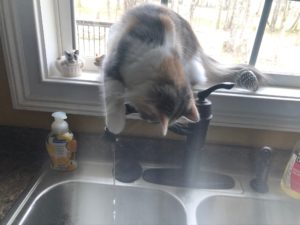 If you’ve ever caught your cat knocking something off the counter with the precision of a seasoned bowler, scratching up the furniture like they’re training for a WWE match, or launching a surprise ankle attack, your first instinct might be to discipline them.
But here’s the thing—cats? They don’t operate on the same system. In fact, disciplining your cat can backfire, making unwanted behaviors worse and damaging the bond between you and your feline overlord—uh, we mean friend.
A Real-Life Example – How Disciplining Cats Often Fails

One of my clients sprayed her cat with water whenever she jumped onto the kitchen counter. The cat learned to stay off the counter while her person was watching, but she still went up there at night and whenever the house was empty.
The spray bottle had not taught her that the counter was off-limits. It had only taught her not to get caught.
A better approach would be to make the counter less rewarding, provide an appealing elevated spot nearby, and reward kitty for choosing that instead.
Still happening when you’re not watching? Stopping punishment is a good first step, but the next step depends on why your cat is doing it. I can look at your cat’s behavior, routine, and home to help you make a plan that fits.
Explore a private consultation for guidance tailored to your situation.
What to Do Instead
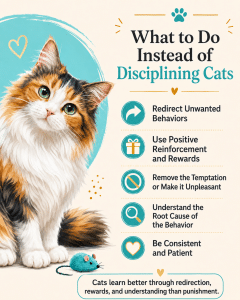
This is where the reverse psychology comes into play. Our task is to find alternatives acceptable behaviors and teach your cat to use them instead.
Here are 5 steps that are actually effective in helping your kitty transition to more acceptable actions.
1. Redirect Unwanted Behaviors
For example, instead of punishing a cat for scratching furniture, provide a sturdy cat scratching post. Place the post near their usual scratching spots and use catnip or treats to make it more appealing. Cats scratch to mark territory and stretch their muscles, so offering an appropriate alternative helps satisfy their natural instincts.
2. Use Positive Reinforcement and Rewards
When your cat does something good—like using their scratching post instead of your sofa—immediately reward them with a treat, petting, or a favorite toy.
Consistency is key to getting cats to repeat wanted behaviors and stop those “bad” ones. Reinforcing the right behavior every time will help your cat make the connection and repeat it willingly. Cats have a very short attention span, so the reward has to come immediately after the wanted action is performed. Otherwise, kitty won’t associate the reward with his actions.
3. Remove the Temptation or Make it Unpleasant
 Use cat deterrents like double-sided tape or motion-activated sprays like SSSCAT on furniture or counters to discourage unwanted behavior. They won’t like the sticky feeling on their paws and will begin to avoid those surfaces. Providing alternative climbing spots, such as cat trees or shelves, scratching posts, and lots of toys can also help direct their energy toward acceptable activities.
4. Understand the Root Cause of the Behavior
Many behavioral issues stem from boredom, stress, or unmet needs. When bored, cats may decide to chew up your plants, get into things they shouldn’t, or direct their energy toward one of their feline roommates.
Make sure your cat has plenty of mental and physical stimulation with toys, scratching posts, and interactive playtime. If they’re displaying aggressive or destructive behaviors, consider factors like changes in routine, lack of socialization, or underlying health issues.
A sudden or unexplained change in behavior should always be discussed with your veterinarian first. Pain and other medical problems can cause aggression, litter box avoidance, restlessness, and other behaviors that may appear to be disciplinary problems.
5. Be Consistent and Patient

This might be the most important key of all: Cats thrive on routine, so be patient and consistent when training them. Sudden changes in response or expectations can confuse them. Stick with positive reinforcement training for cats and give them time to adjust.
Over time, they’ll learn the behaviors that make life happier for both of you.
Disciplining Cats: Final Thoughts
If you’re feeling like nothing you’ve tried is working, you’re not alone. Most cat behavior issues aren’t about “bad behavior”, they’re about unmet needs, stress, or confusion.
And the tricky part is, what works for one cat can make things worse for another, especially in multi-cat homes. But disciplining cats is never the solution.
Tried the Advice and Still Having the Problem?
You can read all the cat behavior advice in the world, but your cat, your home, and your situation are unique.
Stop guessing. You need Rita.





 Put Your Cat on the Analyst's Couch
Leave a Reply