Why do cats need routines? Learn how the PEGS approach, Play, Eat, Groom, Sleep, follows a cat’s natural rhythm and can help them feel secure, settle more easily, and develop healthier behavior.
by Rita Reimers, Certified Cat Behaviorist

Advice From a Cat Behaviorist
Cats can certainly be taught tricks, but understanding behavior goes much deeper than teaching them to perform on command. My work focuses on helping people understand what motivates their cats, why unwanted behaviors develop, and how routines such as PEGS can encourage healthier, more desirable behavior.
When people understand why cats behave as they do, it becomes easier to respond with patience and guide them toward more desirable behaviors. A predictable routine also helps cats feel safe because they know what to expect.
The natural cycle behind many of a cat’s daily activities can be summed up in four simple steps.
The Four PEGS Cat Routine
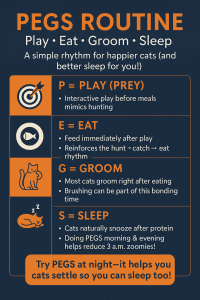 P = Play/Prey Drive: Cats are natural hunters, even when they live safely indoors and never need to catch their own food. Interactive play allows them to stalk, chase, pounce, and capture their “prey,” satisfying instincts that are essential to their physical and emotional well-being.
E = Eat: In the wild, a successful hunt ends with a meal. For indoor cats, offering food after an interactive play session completes that same natural sequence. A small meal or their regular breakfast or dinner helps signal that the “hunt” is over. Predictable mealtimes also give cats another dependable part of their daily routine, helping them know what to expect and when to expect it.
G = Groom: After eating, cats often settle down to groom. You may see them lick their paws, wash their faces, and clean the rest of their bodies. Grooming removes traces of food and helps them transition from the activity of hunting and eating into a calmer, more relaxed state. In the PEGS routine, it is the natural bridge between a satisfying meal and sleep.
S = Sleep: Once the hunt is complete, the meal is finished, and grooming is done, cats are naturally ready to rest. A satisfying play session followed by food can encourage a longer, more peaceful nap. Using the PEGS routine before bedtime may also help cats settle for the night instead of waking their people for attention or play.
Why the PEGS Routine Works
 PEGS may be a simple routine, but it reflects survival instincts that have guided cats for thousands of years. Even our pampered indoor cats still feel the natural drive to hunt, eat, groom, and rest. When we build predictable routines around that rhythm, we help them feel more secure while giving those instincts an appropriate outlet.
Cats are loving companions, but they remain wonderfully wild creatures at heart. I believe it is our responsibility to understand and honor their true nature rather than expecting them to behave like little humans.
When people understand what motivates their cats, they can respond with patience and guide behavior more effectively. It is my fondest wish that this deeper understanding will help more cats remain in their loving, forever homes.