Does your cat eat too quickly, steal food from other cats, constantly beg, guard bowls, or become aggressive at mealtimes? These are all possible signs of food aggression in cats.
Written by Certified Cat Behaviorist Rita Reimers

Although people sometimes call all of these behaviors food insecurity, the two terms are not exactly interchangeable.
Food insecurity is the feeling that food may not be reliably available. It can contribute to food aggression, especially in cats that previously lived outdoors, competed with other animals, or went without adequate food. However, medical problems, stress, competition within the household, and an unpredictable feeding routine can cause similar behavior.
This is not simply a “bad cat behavior” problem. Your cat is responding to hunger, anxiety, competition, a learned survival strategy, or another underlying need.
Why Food Aggression in Cats Develops
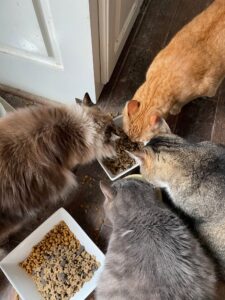
Food aggression describes defensive, competitive, or frantic behavior involving food. A cat may guard a bowl, chase another cat away, eat so quickly that they vomit, or steal food before another cat has finished.
Some cats develop these behaviors after experiencing food scarcity. This may include:
- Living outdoors and scavenging for food
- Competing with littermates or other animals
- Living in an overcrowded or hoarding situation
- Being part of a litter that did not receive enough food
- Living in a home with unpredictable feeding
These cats learned that food could disappear at any moment. Eating quickly or pushing another animal away may once have been necessary for survival.
Other cats develop food aggression after repeatedly competing with housemates at shared bowls. Even when plenty of food is provided, the feeding arrangement itself can create pressure and insecurity.
Common Signs of Food Insecurity
A cat experiencing food-related anxiety or competition may:
- Eat extremely quickly and vomit shortly afterward
- Beg or vocalize constantly around mealtimes
- Jump onto counters or tables searching for food
- Steal food from people or other cats
- Guard a food bowl or feeding area
- Swat, growl, chase, or block another cat during meals
- Seem unable to relax when food is present
- Become agitated while food is being prepared
Why Food Aggression in Cats Happens

From the cat’s perspective, the behavior usually makes sense. A cat that could not depend on regular meals may still feel compelled to eat as much as possible, take advantage of every opportunity, and compete whenever food appears.
However, past scarcity is not the only possible cause. Aggressive or frantic behavior around food can also be influenced by:
- Competition with other cats or pets
- Shared feeding bowls or crowded feeding areas
- Long or unpredictable gaps between meals
- Boredom and insufficient enrichment
- Stress or changes within the household
- Medications that increase appetite
- Medical conditions that cause excessive hunger
Rule Out a Medical Cause for Food Aggression
If your cat’s appetite or behavior around food has changed suddenly, schedule a veterinary examination. This is particularly important if your cat is losing weight despite eating more, drinking or urinating more frequently, vomiting, or experiencing diarrhea.
Behavioral changes cannot fully improve until an underlying medical problem has been identified and treated.
Helping Your Cat Feel Secure Around Food
Helping a cat feel more secure around food takes consistency. The goal is to show your cat that meals are predictable, food will continue to be available, and there is no need to compete.
As that security grows, food stealing, frantic eating, begging, and guarding should become less frequent and easier to manage.
Slow Down Fast Eaters
For cats that “scarf and barf,” slowing down their eating is important.

A lick mat for wet food requires a cat to take smaller bites and can help extend the meal. This can be especially useful in a multi-cat household because it gives the other cats more time to finish eating.
For dry food, try a slow-feeder bowl, puzzle feeder, or treat ball. These options slow the meal while providing mental and physical stimulation.
Give Every Cat a Separate Bowl

Every cat should have an individual bowl. Expecting several cats to share one bowl or communal plate, regardless of its size, creates unnecessary competition.
Place the bowls far enough apart that the cats can eat without staring at one another or worrying that another cat will take their food. Some cats need to eat on opposite sides of the room, behind visual barriers, or in separate rooms with closed doors.
Do not assume the fastest eater is still hungry when they finish first. They may simply have learned to eat quickly so they can move to another cat’s bowl.
Avoid Food Aggression in Cats: Create a Predictable Feeding Routine
Feed at consistent times each day so your cat learns that meals are dependable. Several smaller meals may work better than one or two large meals for some cats.
If your schedule makes frequent meals difficult, a timed feeder can help create consistency. In households where one cat steals another cat’s food, a microchip feeder may allow each cat to access only their assigned meal.
Prevent Food Stealing Without Punishment

Avoid feeding your cat directly from your plate or while you are preparing a meal. Otherwise, your cat learns that begging, jumping, or hovering in the kitchen sometimes produces a reward.
If necessary, give your cat their own meal, lick mat, or puzzle feeder in another area while you cook or eat. This provides an acceptable activity instead of repeatedly removing the cat from the table or counter.
If you want to share an appropriate treat, set it aside and offer it in your cat’s bowl after your meal is finished. A consistent phrase such as “treat time” can help your cat understand when and where treats are given.
Redirect Food Motivation

Food motivation can become a useful source of enrichment. You can:
- Use a treat ball to dispense part of the cat’s measured daily food
- Hide small portions in safe locations for the cat to find
- Use puzzle feeders that encourage natural hunting behavior
- Reward calm behavior while meals are being prepared
- Provide interactive play before feeding
Remember to include treats and food used for enrichment in your cat’s daily intake.
Do Not Punish Food-Related Behavior
Yelling, spraying water, pushing a cat away, or withholding meals will not make the cat feel more secure. Punishment can increase anxiety around food and may intensify guarding, stealing, or frantic eating.
Manage the environment so the unwanted behavior is less likely to occur, then reward calm behavior and appropriate choices.
Is mealtime creating conflict between your cats? If you’ve tried separate bowls and a predictable feeding routine but one cat still guards food, steals meals, or chases the others away, I can look at how your cats interact and help you create a feeding plan that works for your household. Explore a private consultation.
Improvement Takes Time
A cat’s early survival habits may not vanish completely. The goal is to help your cat feel secure, reduce competition, and build confidence that food will continue to be available.
With separate feeding spaces, predictable meals, suitable enrichment, and consistent boundaries, most cats can learn to eat more calmly. The entire household benefits when every cat can enjoy a meal without rushing, guarding, or worrying that another cat will take it away.