Are essential oils safe for cats? While these popular natural products are often used for cleaning and aromatherapy, some can be toxic to our feline companions. Let’s explore which essential oils are harmful, how exposure can occur, and what cat parents can do to keep their pets safe.
by Rita Reimers, Fear Free Certified Cat Behaviorist

What Every Cat (and Dog) Parent Should Know
Essential oils have become increasingly popular for everything from aromatherapy to household cleaning. Some people even use them to clean their kitchen countertops.
But here’s a question every cat parent should consider: Are essential oils actually safe for our cats?
We know that certain essential oils are toxic to cats, but what about the ones advertised as natural, gentle, or even pet-safe? The answer isn’t always straightforward. In fact, even veterinary resources sometimes differ on which oils are considered relatively safe.
My personal recommendation? Avoid using essential oils on surfaces your cats can access, especially where they eat.
Here’s why.
Why Are Cats So Sensitive to Essential Oils?
Cats are not simply small dogs, and their bodies don’t process certain substances the same way ours do.
 Their livers have a limited ability to metabolize some of the chemical compounds found in essential oils. That can make them especially vulnerable to poisoning.
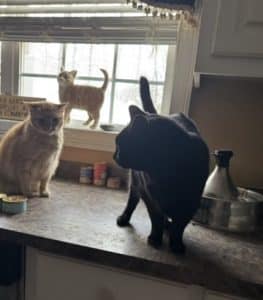
But here’s something many cat parents may not realize: Your cat doesn’t have to drink essential oil directly from the bottle to be exposed. Imagine cleaning your kitchen countertop with a homemade solution containing essential oils. Later, your cat jumps onto that counter, walks across the surface, and picks up some of the residue on their paws.
What happens next? Your cat does what cats do best. They groom themselves! Any residue transferred to their paws or fur may then be swallowed during grooming.
Essential oils can also be absorbed through the skin, and certain oils can cause respiratory irritation when inhaled. That’s why I am particularly concerned about essential oils being used on surfaces cats routinely access.
Which Essential Oils Are Toxic to Cats?
According to Pet Poison Helpline, essential oils known to cause poisoning in cats include:
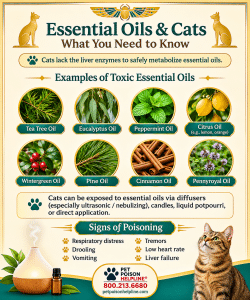
- Citrus oils: Orange, lemon, lime, grapefruit, and other concentrated citrus oils
- Tea tree oil: Also known as melaleuca
- Peppermint oil
- Eucalyptus oil
- Cinnamon oil
- Clove oil
- Pine oil
- Wintergreen oil
- Sweet birch oil
- Pennyroyal oil
- Ylang-ylang oil
This is not an exhaustive list. Other oils may also present risks, depending on their chemical composition, concentration, and how the cat is exposed. For a more comprehensive discussion, I recommend reading Pet Poison Helpline’s guide to essential oils.
Signs of Essential Oil Poisoning in Cats
Symptoms of essential oil poisoning can vary depending on the oil, concentration, and amount of exposure.
Warning signs may include:
- Excessive drooling
- Vomiting
- Lethargy or unusual weakness
- Unsteady walking or loss of coordination
- Tremors
- Coughing, wheezing, or difficulty breathing
- Irritation of the skin or mouth
Severe poisoning can cause more serious complications, including liver injury and neurological symptoms. If you suspect your cat has been exposed to a potentially toxic essential oil, contact your veterinarian or a pet poison control service promptly. Do not attempt to induce vomiting.
A Resource Every Cat Parent Should Know
 One of my favorite resources for pet poisoning questions is Pet Poison Helpline, a 24-hour animal poison control service.
I had the pleasure of welcoming Dr. Renee Schmid from Pet Poison Helpline to my podcast, 19 Cats & Counting, for Episode 111. We discussed the important work they do helping pet parents navigate potential poisoning emergencies.
Pet Poison Helpline can be reached at 855-764-7661. A consultation fee may apply. Tape their number to your refrigerator so you know where it is in case of an emergency.
But Aren’t Some Essential Oils Safe for Cats?
This is where things get confusing!
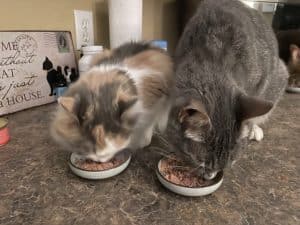 Search online for essential oils that are safe for cats, and you’ll find conflicting information. Some websites identify certain oils as relatively safe when heavily diluted, while others recommend avoiding essential oils around cats entirely.
Even veterinary sources differ in their recommendations. For example, Lynbrook Veterinary Clinic’s article about essential oils and pets discusses oils considered less hazardous under certain circumstances while also warning about the dangers of direct exposure.
But there’s an important distinction here: Lower-risk does not mean completely safe. An oil that may pose relatively little risk under one set of circumstances isn’t necessarily appropriate for cleaning a countertop your cat walks across or eats from.
Concentration matters, too. A commercially formulated product containing a very small amount of an essential oil is not equivalent to applying concentrated oil directly to a surface. Rather than trying to figure out which oils might be safe enough, I prefer to eliminate the unnecessary risk altogether.
What About Essential Oil Diffusers?
Diffusers deserve special attention because they’re another popular way people use essential oils at home. Not all diffusers work the same way.
- Passive diffusers release fragrance into the air without actively dispersing oil droplets. Their primary concern is respiratory irritation, although spills and direct contact can create additional hazards.
- Active diffusers, including ultrasonic and nebulizing models, can release tiny droplets of essential oil into the air. Those droplets may settle on a cat’s fur, where they can be absorbed through the skin or swallowed during grooming.
- Learn more about Passive vs Active diffusers here: Are Your Essential Oils and Diffusers Hurting Your Pet
Cats with existing respiratory problems may be particularly sensitive to airborne irritants. If you enjoy using diffusers, it’s worth discussing their use with your veterinarian rather than assuming they’re harmless because the oils are diluted.
Are Essential Oils Harmful to Dogs, Too?
 Yes! Although cats are particularly sensitive to certain compounds found in essential oils, dogs can also experience essential oil poisoning.
Some oils of particular concern for dogs include tea tree, pennyroyal, wintergreen, sweet birch, pine, cinnamon, clove, eucalyptus, and peppermint. Dogs may be exposed by licking treated surfaces, ingesting oils, absorbing them through their skin, or inhaling concentrated vapors. The risk depends on the specific oil, its concentration, and the amount and type of exposure.
If you share your home with both cats and dogs, my recommendation is the same: Avoid using essential oils to clean surfaces your pets can access.
Cats and Countertops
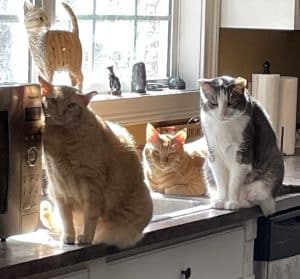
Some of my cats hang out and eat on the countertops, some don’t care to venture up there. BUT don’t count on your cats never jumping up there, especially if they smell something delicious. Keeping counters clean should be done in safe and mindful way, so your cats don’t accidentally get sick from oils and detergents.
Safer Ways to Clean Countertops When You Have Cats
For surfaces your cats can access, such as countertops, floors, and areas where their food is served, I recommend choosing cleaning products without added essential oils or strong fragrances. Always follow the manufacturer’s instructions, especially for food preparation surfaces, and allow cleaned areas to dry completely before letting your cats return.
And remember, even products marketed as natural or pet-friendly should be evaluated based on their actual ingredients and directions for use.
Refer to Preventative Vet’s article if you aren’t sure what to use: Cleaning Products That Are Safe for Pets
What If You Feed Your Cats on the Counter?
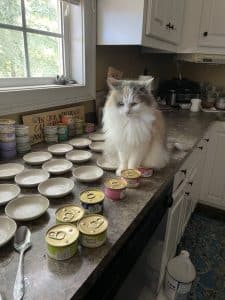 In homes with both cats and dogs, elevated feeding stations are sometimes necessary to prevent dogs from eating the cats’ food.
If your cats eat on countertops, consider using washable, non-fabric feeding mats, such as silicone mats. These provide a convenient surface for feeding and can be cleaned after meals. These Gorilla Grip Feeding Mats are purrfect!
However, feeding mats are not a substitute for using an appropriate countertop cleaner. Cats may walk across the surrounding surfaces before or after eating.
How Can You Keep Cats Off Certain Counters?
Perhaps you’re using essential oils because you’ve heard that cats dislike certain scents. But I don’t recommend using essential oils as a cat deterrent.
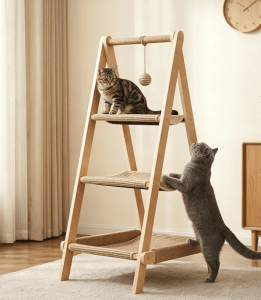 Instead, consider why your cat wants to be on the countertop in the first place. Cats naturally seek elevated locations where they can observe their surroundings and feel secure.
If the countertop is the highest available spot in the room, why wouldn’t your cat want to be there?
Try providing a sturdy cat tree, wall perch, or another elevated resting place that’s even higher than the countertop. Make that location attractive with comfortable bedding, treats, or playtime. This A-frame Cat Tower,for example, would make a nice place for your cats to relax in your kitchen instead of the countertops.
The goal isn’t simply to keep your cat off the counter. It’s to provide an alternative that satisfies the same natural desire to climb, perch, and observe.
The Cat Analyst’s Advice
 I understand the appeal of essential oils. They smell wonderful, they’re widely available, and they’re frequently promoted as natural alternatives to conventional household products.
But natural doesn’t always mean harmless. When it comes to our cats, I don’t believe it’s worth taking unnecessary chances.
My recommendation is simple: Avoid essential oils on surfaces your cats can access, especially their feeding areas.
Choose appropriate cleaning products, provide safe alternatives for cats who love climbing onto counters, and keep concentrated essential oils out of reach. After all, our cats depend on us to make their environment as safe and comfortable as possible.
For more information about essential oil toxicity in both species, visit Pet Poison Helpline’s Guide to Essential Oils.