Why cats spin in circles before lying down usually comes down to instinct, comfort, and one final safety check before settling in. This quirky bedtime ritual is normally harmless, although sudden or compulsive circling can sometimes signal that something is wrong.
by Rita Reimers, Cat Behaviorist
 Why Cats Spin in Circles Before Lying Down
Don’t worry. Your cat isn’t buffering, rebooting, or trying to summon a tiny feline tornado.
I was writing at the kitchen table the other day, focused on my laptop, when I felt fur against my arm. That’s nothing new. It happens all the time when you live with 15 rescue cats. But out of the corner of my eye, I noticed an orange ball of fur doing little circles beside me.
It was Simba. After three spins, he settled down in the exact spot where he started, leaned against my arm, and prepared for a snooze.
So, What Was Really Happening?

Simba was acting on instinct. This familiar “pre-sleep spin” is commonly believed to be a behavior passed down from cats’ wild ancestors, when circling may have helped them prepare a resting place and check their surroundings before settling down.
Of course, Simba isn’t flattening tall grass or checking for snakes before curling up beside me. Like many indoor cats, he is simply carrying on an ancient bedtime ritual, even though he now has soft blankets, comfortable furniture, and my arm available whenever he needs a pillow.
So, what practical purposes might this circling behavior have served?
They’re Preparing a Comfortable Bed
Wild cats didn’t have fluffy blankets or memory foam pet beds. Before settling down, circling may have helped them flatten tall grass, leaves, or even snow to create a softer, more stable place to sleep.
Moving the surrounding material into a shallow nest may also have helped retain body heat and make the resting place more comfortable.
Cats Spin in Circles to Make Sure It’s Safe

That little spin may also have given cats one last opportunity to check their surroundings. Circling could disturb insects hiding in the grass, encourage snakes or other small animals to move away, and provide a quick look in every direction before a cat became vulnerable during sleep.
Some Cats Just Love the Ritual
Today’s indoor cats don’t need to flatten grass or watch for predators, yet many still perform the same little bedtime dance. Instinctive behaviors can remain long after their original purpose is no longer necessary. The danger may be gone, but the ritual remains.
The Bed Is Ready for Slumberland

Once a cat spins in circles and finds that “purrfect” position, they may stay there for a surprisingly long time. I can personally attest that Simba often remains in the exact same position for hours.
Many times, I have awakened with pins and needles in my arm because Simba slept on it all night. Of course, I couldn’t move him. We cat parents know that disturbing a sleeping cat is simply not permitted.
Cats certainly can move while sleeping. They may stretch, roll over, twitch while dreaming, or change positions if they become too warm or uncomfortable. But Simba often seems perfectly content to curl up in one spot and remain there until my arm is completely numb.
Why Cats Spin in Circles and When to Be Concerned

In almost every case, a cat spinning in circles before lying down is perfectly normal. It is simply part of your cat’s instinctive bedtime routine.
However, this is different from a cat who suddenly begins walking in circle
s while awake. Contact your veterinarian promptly if the circling is new or persistent, always occurs in one direction, or is accompanied by disorientation, a head tilt, falling, unusual eye movements, or difficulty balancing.
These symptoms can be associated with an underlying balance or neurological problem. The Cornell Feline Health Center lists circling or falling to one side, a pronounced head tilt, and involuntary eye movements among the common signs of vestibular syndrome in cats.
Sweet Dreams!
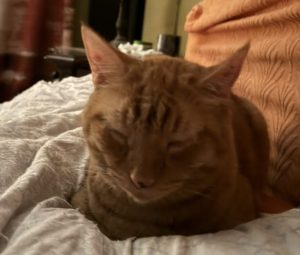
The next time you catch your cat spinning a few circles before settling down, don’t panic. They’re not buffering, rebooting, or trying to summon an Orange Feline Tornado.
They’re simply completing their familiar bedtime ritual and making sure they have the perfect spot for what cats do best: taking a nap.
Simba, can I have my arm back now?