Cat vet visits can become stressful before you even leave home. The carrier appears, your cat disappears, and suddenly you’re running late while trying to coax a frightened feline out from under the bed. With a little preparation, you can make the carrier, car ride, veterinary exam, and return home easier for both you and your cat.
by Rita Reimers, Cat Behaviorist
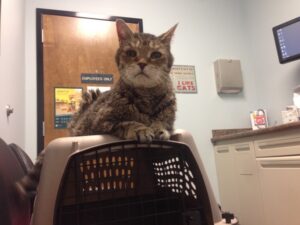
Purr-fectly Calm: How to Ace Vet Visits
Preparing your cat for veterinary visits doesn’t just make the experience easier for you and your cat. Your veterinarian and their staff will appreciate it, too.
A cat who is less stressed is easier to examine and handle, allowing the veterinary team to do their jobs with less stress for everyone involved.
Stress-free cat vet visits also mean a happy veterinarian!
Understand Your Cat’s Reaction to FAS (Fear, Anxiety, Stress)
 One of the key components to achieving calm cat vet visits is to first understand your cat’s reactions to fear, anxiety and stress in general, not just during vet trips. Some cats react to stress by hiding, some just freeze with anxiety, while others are ready for a fight. All of these are normal reactions to FAS, and your cat should not be punished for exhibiting any of them.
 Instead, learning how to help your cat feel more secure and less reactive to situations he finds unpleasant is one key. It’s not about force: it’s about taking the fear out of certain aspects of the vet trip.
It’s important to observe each individual cat, listen to what they’re communicating, prepare rather than react to how they show their stress. Watch closely, and don’t push your cat past his limits, merely because we want to get something accomplished.
Let’s take a look at how to prepare your cat for the vet, before even having to make that trip.
Stress-Free Starts Before You Leave Home
Preparing for stress-free cat vet visits start at home, even before your cat needs a visit. If you make each aspect of the visit comfortable and familiar, chances your cat will remain calm and compliant.
Here are some things to consider.
What Truly Rewards Your Cat?
Let’s start by first understanding what motivates a cat. Cats learn by rewards and consequences. If an action gets the cat a reward or payoff of some kind, then the cat will repeat said action. However, if that action gets him nothing, then they likely won’t repeat it, or won’t do so for very long.
Rewar ds: We want to make it worth their while to choose behaviors we want to encourage buy giving a reward, such as a treat, brushing, praise or whatever will motivate your cat.
Consequences: Cats don’t keep trying a behavior over and over, hoping to get a different result. If they get nothing positive from a behavior, they will soon tire of it and learn that particular behavior will not result in a payoff.
This is why it’s important to know exactly what your cat considers a premium reward. It is that delicious treat, some tuna, or it is simply praise and playtime that motivates him? My Simba will turn himself upside-down if I tell him he is a good boy!
Once you know the answer to what motivates your cat, then use it as a reward to teach him not to fear the two components of the vet visit that often trigger anxiety: the carrier and the car ride.
Getting Your Cat Into the Carrier (Without a Battle)
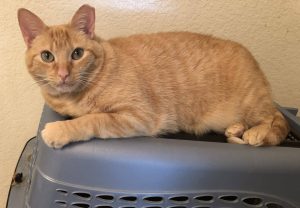 For many cats, the stressful part of the vet visit begins long before they ever see the veterinarian. It begins the moment the carrier comes out of the closet, down from the attic, or in from the garage.
First off, the carrier is going to smell strange to your cat, not like the rest of your home. Cats are very scent orientated, so this matters more than you’d think.
Additionally, if your cat only sees the carrier right before a trip to the vet, it becomes a very reliable predictor that something unpleasant is about to happen.
Preparation for stress-free vet visits takes some preparation. Choosing the right carrier, taking your time, and avoiding the chase-and-grab routine whenever possible are all things that help make it easy for both of you.
The Usual Pre-Vet-Visit Scenario
 Here is what usually happens when preparing for cat vet visits: You sneak around quietly (a hint to your cat that something is up), you bring out the carrier, and your cat disappears before you even attempt to get cat and carrier into the same vicinity.
He dives under the bed or runs upstairs to hide behind a dresser. Suddenly you’re searching the house, moving furniture, and trying to pull out a frightened cat while watching the clock.
And IF you DO catch him, cats have this spider-like ability to spread out all four limbs so you cannot get him to go inside. By the time you leave the house, everyone is already stressed, and usually the human has had a cardio workout, too.
Sound familiar? Let’s flip the script.
Turn the Cat Carrier into a Safe Place
 Before you ever need to go on cat vet visits, turn the carrier into part of your cat’s everyday environment. Leave a carrier out in an area where your cat spends time, with the door open or removed if possible. Place a soft blanket or familiar bedding inside, ideally something he has laid on so it smells like him.

Toss treats into it occasionally, play with him by the carrier, feed treats or his meals nearby, and even incorporate the carrier into play. Some cats may eventually choose to nap in it, like my Simba here. I actually had to start leaving two carriers out because many of my cats enjoy napping in them.
The goal here is to change what the carrier means to your cat. Instead of carrier = vet, you want the carrier to become just another familiar, safe object in your cat’s environment. The carrier becomes a safe-space rather than something to fear.
Once your cat is comfortable going inside voluntarily, practice briefly closing the door, rewarding your cat, and opening it again. Gradually work up to picking up the carrier and walking around the house with it before putting it back down. These practice sessions should be short and happen when you have nowhere to go yet.
Make Car Rides Enjoyable
Continuing with creating stress-free feline vet visits, the car ride is the next hurdle to overcome. Once your cat is comfortable with the carrier itself, the next step is to desensitize the car ride.
For some cats, simply putting the carrier into the car is enough to trigger anxiety. The strange smells, engine noise, vibration, movement, and passing sights can all be overwhelming, especially if every car ride your cat has ever taken ended at the veterinary office.
Carriers and Placement in the Car
Taking your cat in his carrier for short car rides can help him get used to the motion of the car. These few adjustments can make all the difference in how the car ride goes:
- I prefer using hard-sided over soft-sided carriers. Cats can easily use their noses to open the zippers on soft carriers. True Story: My mom did the spay-neuter runs for the local Humane Society. After one harrowing experience in the car with a feline escapee, she would no longer accept cats in soft-sided carriers.
- Add a padlock or at least some twist ties to all carrier doors to prevent accidental escapes.
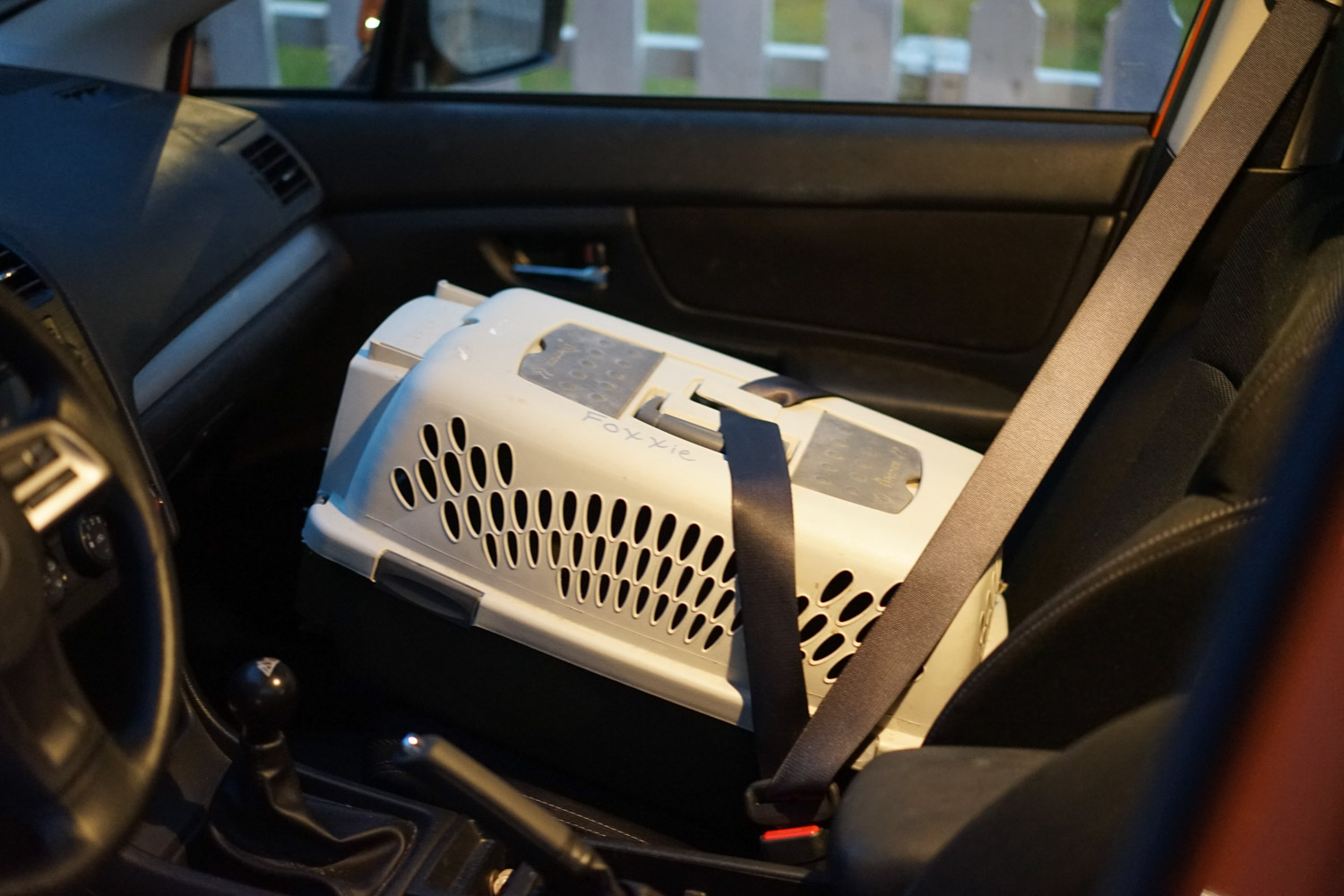
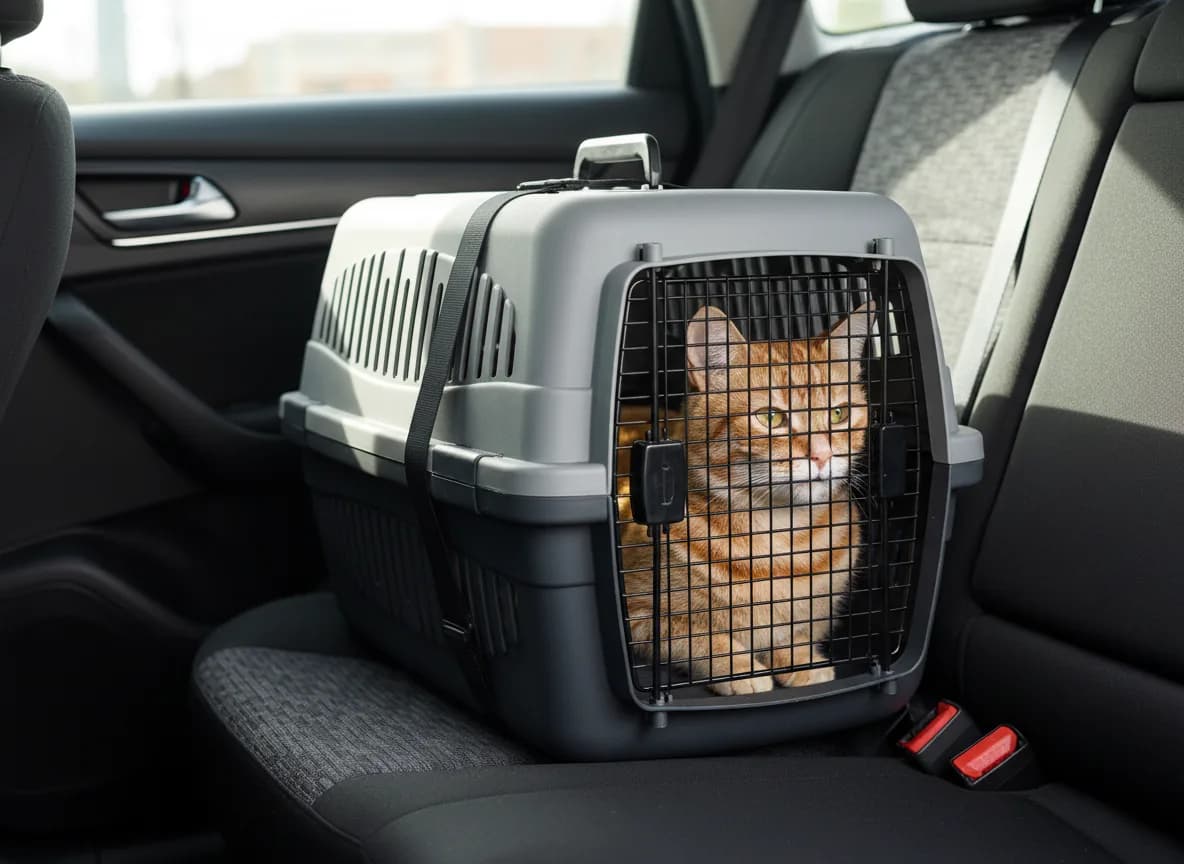
- Secure the cat carrier so it won’t slide around in the car. The safest places for the carrier are the front passenger side on the floor or on the back seat, secured with the seat belt.
- Cover the carrier on the top and 3 sides, leaving one side uncovered for ventilation.
- Play some soft music in the car. I suggest Music for Cats by David Teie, which can be streamed free from Spotify, Amazon, and YouTube. I also play it from my phone during cat vet visits. Dr. Glenn tells me it helps him to relax, too!
Calming Aids
Some cats may benefit from calming aids before getting into the carrier and/or the car. Calming treats and holistic tinctures can be very helpful for keeping your cat’s anxiety in check.
My Personal Story
When I moved back to the Carolinas from Los Angeles in 2013, my 17 rescue cats came with me. Yes, all in carriers, all in my Rav-4. If it wasn’t for Rescue Remedy for Cats, we probably would not have made the 4-day 3-motel-stay trip as calmly as we did.
Learn more tips in my Catster article: Carrier Training Your Cat
Cat Vet Visits: Victory is Within Reach
 You’ve prepared for the stress-free vet visit, now you’re actually at the vet. Once you arrive, it’s a good idea to put the carrier down on a seat before standing in line to check in. Look for a quiet place where there are not a lot of dogs lingering.
After checking in, keep your cat’s carrier on the seat next to you or on your lap. Avoid placing your cat carrier on the floor, where there are plenty of strange smells and easy access to him by nosy dogs.
Once inside the exam room, open the carrier and let your cat decide if he wants to come out. Curiosity will get him to eventually venture out, along with some coaxing with treats. Leave the carrier door open so he can return to his safe space should he become anxious, and speak to him in soft soothing tones.
Know When Your Cat Has Had Enough
 Should you notice that your cat has had enough of this vet visit and has somewhat shut down, it’s a good idea to end the examination. Look for signs like tense body, sitting in loaf position, ears back, pupils dilated, and that bottle-brush tail are all signs of sensory overload.
Likewise, if your cat is vocalizing, hissing, lashing out, or seems to be in a “freeze” state, these are all signs of extreme FAS (Fear, Anxiety, Stress) and the exam should be paused or ended.
Are We Home, Yet?
 My cats are usually calmer in the car on the way home from the vet. Or they are just relieved to be out of there! Either way, keep a calm atmosphere when you are in the car by again playing soft music and talking softly to your cat during the car ride home. Use calming aids again if necessary, especially if you have a long drive home.
Arriving Back Home from Cat Vet Visits
We’re here, the visit is over and we’ve had a Vet Visit Victory! HURRAY! However, there are still a few things to consider when coming back into the house.
- Your cat may not come out of his carrier quickly, but don’t force him.
- Take the carrier to one of his favorite spots in the house and open the door. Encourage him using soothing talk and maybe some treats, but do not forcefully pull him out of the carrier. He will come out on his own when he is ready.
- If you have other cats in the household, they may want to come see what’s happening, which could make your carrier cat more nervous about coming out. Talk gently to all the cats, and give the ones who didn’t go to the vet some treats or play to keep them occupied and away from the carrier.
- Once your vet visit cat exits the carrier, your other cat(s) may want to venture inside for a sniff. That’s ok as long as your cat didn’t soil the inside.
Beware of Feline Non-Recognition Aggression

Cats recognize one another by smell more than by sight. In nature, cats depend upon that so they know right away if there is a strange cat or other animal around. In a multi-cat household, if one cat goes to the vet and the other(s) stay home, the vet visit cat comes back with smells from the vet’s office and/or any treatments received.
What is it exactly?
There is actually a name for this phenomenon, it’s called Feline Non–Recognition Aggression. It’s fairly common and unfortunately not enough veterinarians think to explain it to their cat clients. In fact, my friend Dr. Rachel Geller came on my podcast with a client of hers whose cats were caught up in this scenario. Although there are other times it can happen, it is more likely to happen after cat vet visits.
Can it be prevented?
Preventing Feline Non-Recognition Aggression may be accomplished with a few pre and post cat vet visit steps:
- Brush or rub the cat that is going to the vet with a towel, to get his scent on the brush or towel before you leave.
- When he returns from the vet, he will smell different to the other cat(s). Brush him again with the brush or rub with the towel to redeposit his scent back onto him.
- It may also help to feed them all some smelly wet food if there has been dental work or surgery to mask the medicinal smell and help them to smell alike.
- Ideally, for routine visits it works well if you can bring them all together. (Unless you have 15 cats, like I do!)
Stress-Free Cat Vet Visits: Better Health, Cheaper Vet Bills, Longer Life
 By following these guidelines, you will be able to get your cat to the vet for his yearly check-ups without stress to your cat, or to you.
Instead of avoiding visits to your veterinarian, you’ll be able to catch illnesses early, and perhaps have many more years potentially with your cat. You might also have lower vet bills. Early treatments are often less expensive than treatments for an illness that has progressed.
Your cat may even become one that your veterinarian looks forward to seeing. Sometimes the staff at my vet’s office doesn’t want my cats to go home. And my cats love the extra attention and special treats they get there, too! VIP Star Treatment goes to those Stress-Free Felines!