 Why It Hurts More Than It Helps
Written by Cat Behaviorist Rita Reimers
Updated for 2026
To Declaw or Not to Declaw… That Is the Question
Hint: The answer is always a big, loud NO!
Oh, those precious kitty paws! Who doesn’t melt at the sight of those tiny toe beans or little white “socks”? They’re irresistibly cute.
 But hidden beneath all that adorable fluff lies one of a cat’s most powerful tools—their claws.
Sure, those claws can sometimes wreak havoc. Maybe your kitty used your leg as a climbing post or left a few designer scratches on your couch. But before you consider declawing, let’s talk about what that really means for your cat—and why declawing cats should never be an option.
Would You Cut Off Your Fingertips?
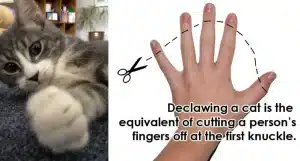
Declawing isn’t a manicure. It’s an amputation. When I was younger, declawing was common, but we now know better.
Take a look at your hand. See that first joint on each finger? Declawing removes everything beyond that joint—bone, tissue, and nail. Imagine trying to walk or grasp things after losing every fingertip. Ouch, right?
Cats depend on their claws for balance, stretching, climbing, and even emotional confidence. Removing them changes everything. And it’s painful—both physically and psychologically.
Many declawed cats develop chronic pain, nerve damage, or back problems because they must change how they walk. Some even develop infections or regrowth issues that require more surgery. No wonder it’s now illegal in many places.
How Declawing Affects Cats

Declawing a cat doesn’t solve problems—it creates them. The list of possible consequences is long:
🐾 Chronic paw and back pain
🐾 Nerve damage and lameness
🐾 Infections and tissue death
🐾 Behavioral problems such as biting or hiding
🐾 Litter box avoidance (because digging hurts!)
When your cat can’t scratch, they lose one of their main ways to stretch muscles, mark territory, and relieve stress. Imagine being forced to give up something that makes you feel safe—it’s heartbreaking and can also cause new behavior problems.
Kind Alternatives to Declawing Cats
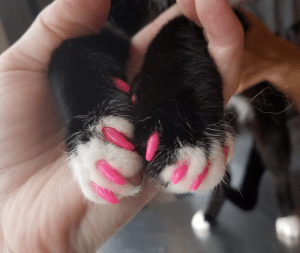
💅 Nail Caps (Kitty Nail Tips)
If you’re desperate to save your sofa, nail caps can be a temporary solution. These soft vinyl covers slide over each claw and dull the sharp tips.
They even come in fancy colors—though my cats informed me they’re already fabulous enough, thank you very much! You’ll usually need your vet or groomer to apply them, and they need replacing every 4–6 weeks.
⚠️ Note: Nail caps are not safe for outdoor cats, who need their claws for protection.
For more details, check out 5 Myths You Should Know About Cat Nail Caps by the National Cat Groomers Institute.
🪵 Scratching Posts & Pads

Scratching is a natural instinct, not a bad habit. Even declawed cats often go through the motions! Instead of fighting it, redirect it.
Offer different scratching options:
- Vertical posts (wrapped in sisal rope)
- Horizontal cardboard pads
- Door-hanging scratchers for variety

💡 Cat Tip: Sprinkle catnip or silvervine on new scratchers to make them irresistible. Praise and reward your cat when they use them—you’ll have a happy cat and a happy couch!
Each cat has personal preferences. Observe your kitty and provide what they love most. My own crew of 16 all have favorite posts—and my furniture stays intact.
Read this article written by the AVA for more details and Alternatives to Declawing
✂️ Kitty Manicures
Regular nail trims prevent snags and accidental scratches. You can do it yourself or have your vet handle it.
 Tools include:
- Cat nail clippers
- Human-style clippers made for cats
- Motorized grinders (if your cat tolerates the sound)
Trim only the sharp hook at the end—avoid the pink “quick” inside, where nerves and blood vessels live. Cutting too short can hurt their paws, just like when we tear a nail.
How to Help Your Cat Get Used to Nail Trims

Start early if possible! Kittens learn best through gentle handling:
- Touch their paws daily for a few seconds.
- Reward calm behavior with treats or pets.
- Leave the clippers where your cat can see them.
- If using a grinder, turn it on away from your cat a few times first so they get used to the sound.
Patience and consistency turn nail trims from scary to no-big-deal.
Where Is Declawing Cats Illegal in the USA
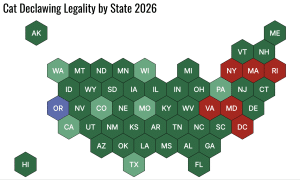
AS OF Jan 2026 – ONLY 6 STATES OUTLAW DECLAWING!
Declawing is banned in many countries and several U.S. states and cities, including New York and Maryland. Sadly, too many places still allow this outdated, painful procedure.
The good news? Public opinion is changing. More veterinarians refuse to perform declaws every year. The more cat lovers learn the truth, the faster we can make this cruel surgery a thing of the past.
But sadly, we have a long way to go towards making declawing illegal everywhere. You can see the map up close at Cat Declawing Legality by State.
💜 My Final Thoughts on Declawing
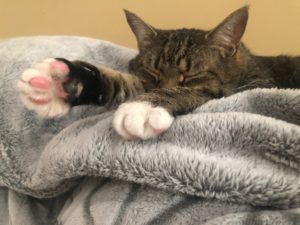 Cats need their claws — for balance, protection, communication, and play. They aren’t trying to destroy your couch; they’re simply being cats.
Instead of punishing natural instincts, let’s guide them. Offer scratching alternatives, do gentle nail trims, and protect those perfect paws.
From one lifelong cat mom to another: Don’t declaw—redirect, trim, and love those paws, claws and all.
Before you know it, those precious paws will be clipped and the urge to scratch will be satisfied. Now, let’s get back to looking at those toe beans! Oooh! Toe beans!!!
HOW TO TRIM THOSE BEANIE TOES!
Need Help Solving Your Cat’s Behavior Problems?
Book a private consultation with Rita Reimers, Certified Cat Behaviorist.
Book a Consultation

Leave a Reply