 Spraying Causes and Solutions
by Cat Behaviorist Rita Reimers
Cats are known for their mysterious behaviors, and one of the most perplexing to cat owners is spraying. This behavior, where cats release small amounts of urine onto vertical surfaces, can be frustrating and confusing. Understanding why cats spray can help pet owners manage and address this issue effectively.
 Is it only Un-neutered Male Cats that Spray?
Unfortunately, any cat can spray when feeling scared, anxious, or territorial. While it is most likely for un-neutered males to spray, all cats regardless of their sex or spay/neuter status can indeed spray when feeling stressed or unsafe.
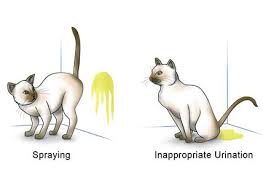 Is Spraying the same as Peeing Outside of the Box?
While both behaviors are unpleasant and can really mess up your home, the two behaviors are not the same and come from two different perspectives:
- Spraying the wall or an item is usually done to protect and claim territory, and is accompanied by the characteristic circle patter with drip marks. Some cats will avoid litter pans that are dirty and spray on the wall to show their displeasure and need to re-mark their territory, but it’s not the same as peeing outside of the box.
- Peeing outside of the box is a puddle on the floor or on soft items. This behavior is usually cause by unclean litter pan, not enough pans for all the cats, inability for he cats to get to the pan, or one cat preventing the other from using the box.
For this article. we’re going to concentrate on what causes spraying and how to fix it.
Spraying is almost always rooted in stress, insecurity, or territory conflict — and it can be fixed once you understand the cause. I can help you get to the bottom of what’s triggering your cat and restore peace (and cleanliness!) in your home.
Get Expert Help From Certified Cat Behaviorist Rita Reimers →
 Anatomy of a Cat Spray
Cats spray as a way to mark their territory, communicate with other cats, and sometimes to alleviate stress or anxiety. It’s a behavior more commonly seen in un-neutered male cats, but female cats and neutered males can also spray.
The spraying behavior involves them releasing small amounts of urine onto vertical surfaces like walls or furniture. This behavior can be influenced by various factors such as hormonal changes, competition with other cats, or changes in their environment.
5 Reasons Why Cats Might Spray
1. Territorial Marking/Too Many Cats
One of the primary reasons cats spray is to mark their territory. Cats are territorial animals, and spraying allows them to establish boundaries and communicate with other cats in the area. Both male and female cats can engage in territorial spraying, although it’s more common in intact males.
 2. Sexual Behavior in Cats not Spayed/Neutered
Un-neutered male cats are particularly prone to spraying as a way to advertise their availability to potential mates. This behavior is driven by hormones and typically diminishes or stops after neutering.
3. Medical Issues – Rule these out first
In some cases, spraying can be a sign of an underlying medical problem such as urinary tract infections or bladder stones. It’s essential to rule out medical causes by consulting with a veterinarian if spraying suddenly begins or changes in frequency.
4. Stress and Anxiety in the Household
Stressful situations can prompt cats to spray as a coping mechanism. Changes in the household, such as moving to a new home, introduction of new pets, or even rearranging furniture, can trigger spraying behavior. Cats may also spray when they feel threatened or insecure.
 5. Social Hierarchy in a Multi-Cat Home
In multi-cat households, spraying can occur as part of social hierarchy establishment or conflict resolution among cats. Cats may spray to assert dominance or challenge another cat’s territory.
 How to Stop that Cat Spraying Behavior
Managing spraying behavior involves a combination of strategies tailored to the specific cause:
- Neutering: Neutering male cats reduces or eliminates spraying behavior in most cases.
- Medical Evaluation: If spraying is sudden or persistent, a thorough veterinary examination is necessary to rule out medical issues.
 Environmental Enrichment: Providing a stimulating and secure environment can reduce stress-related spraying. This includes offering scratching posts, perches, hiding spots, and interactive toys.
- Behavior Modification: Positive reinforcement techniques can be used to discourage spraying and encourage desirable behaviors.
- Remove Feral Cats: Feral or Community Cats hanging around your house could make your indoor cats feel territorial, and cats claim territory in nature by spraying.
- Clean Up that Spray Thoroughly: As with peeing outside the box, cats will be attracted the the same spots over again if that spray is not cleaned with an enzymatic cleaner. OR, other cats in the home might decide they need to re-claim that spot by spraying over it.
Two Products We Recommend
We recommend two products to help stop cat spraying:
- Anti Icky Poo
 : this is a SAFE enzymatic cleaner that will eliminate all odors, even the ones you can’t smell but you cat can. Spray it on surfaces, dump it into cushions, wash spray-soaked items with in as an additive to your detergent. You can even spray is on curtains and watch the enzymes work their magic.
 - Cat Mace
 : If outside cats are a problem, and with ferals you may never see them but your cats smell them, spread Cat Mace around the perimeter of your home. Cat Mace won’t hurt them, but the smell (we can’t smell it) of the mace will make cats decide to not stay around. The cats may still walk by, but none of them will want to lay claim or make a nest near the cat mace. You can even use it indoors to keep cats away from places where you don’t want them going (like in your potted plants or even in a closet).
A Spray-Free Home
Understanding why cats spray involves recognizing their natural behaviors and motivations. While spraying can be frustrating for cat owners, it’s essential to approach the issue with patience and understanding.
By addressing the underlying causes and implementing appropriate management strategies, cat owners can help their feline companions live comfortably and peacefully in their homes.
If your cat is peeing and/or pooping in odd places, please read our article: My Cat Pooped On My Bed
Need Help Solving Your Cat’s Behavior Problems?
Book a private consultation with Rita Reimers, Certified Cat Behaviorist.
Book a Consultation

Leave a Reply