Is Your Cat Peeing on Everything?

Here’s What Might be Going On
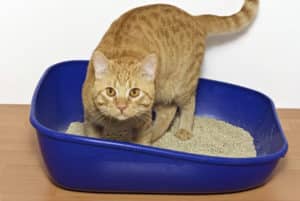
Finding pee puddles all over your house is frustrating and confusing. You may wonder, “Is this medical or behavioral?” In a word — yes. It can be both.
By Cat Behaviorist Rita Reimers
Updated for 2025
Why Does Litter Box Avoidance Happy?
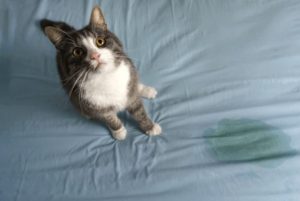 There are both behavioral and medical reasons for litter-box avoidance. Stress, fear, and anxiety can cause your kitty to avoid the box, and we have behavior-modification techniques to help if that’s the case.
However, many medical conditions also trigger this behavior. Behavioral training alone won’t fix a medical problem — that has to be treated first. Once the pain or inflammation is under control, we can address any leftover litter-box habits through behavior work.
Medical Reasons for Avoiding the Litter Box
When a cat is in pain, they often associate the litter box with that discomfort. If every time you sat down on the toilet you felt pain, you’d avoid it too!
Cats also instinctively avoid a “communal” elimination area when sick, as a way of protecting their clowder. Most urinary pain falls under a group of conditions known as Feline Lower Urinary Tract Disease (FLUTD) — a broad term that covers several specific medical issues.
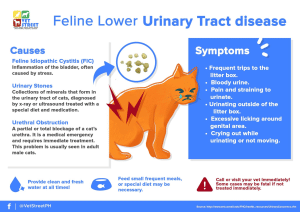 FLUTD in Cats- Two Main Types
1️⃣ Urinary Tract Infections (UTIs)
UTIs are fairly common and can become life-threatening if untreated. A simple urine test (usually $25–$75) tells your vet whether bacteria are present.
Because UTIs are dangerous, easy to test for, and fairly simple to treat, this is the first thing most vets check — which makes PURR-fect sense.
If bacteria are found, antibiotics usually clear the infection. If your cat continues urinating outside the box afterward, the pain-avoidance habit may remain; that’s when behavior modification helps get kitty back on track.
⚠️ However, a negative bacterial test doesn’t rule out medical causes. Many vets stop here and assume it’s behavioral, but another common condition often hides beneath the FLUTD umbrella — interstitial cystitis.
 2️⃣ Interstitial Cystitis (FIC)
The most common cause of FLUTD in Cats is feline interstitial cystitis (FIC) — and sadly, it often goes undiagnosed. Studies show that over half the cats tested had FIC without their humans realizing it.
Why don’t vets test for it more often?
Because an inexpensive urine test won’t detect it. Confirming FIC requires a cystoscopy (inspection of the bladder) that can cost $1,000–$2,000.
FIC isn’t usually an immediate threat like a UTI, so many cats live with chronic inflammation that flares under stress. When a vet strongly suspects FIC but testing isn’t feasible, they may choose to treat “as if” the cat has it.
👉 Want to learn the warning signs to watch for? Check the “Medical Red Flags for Peeing Outside the Box” section in my article, Cat Pees Outside the Box — Why It Happens and How to Stop It.
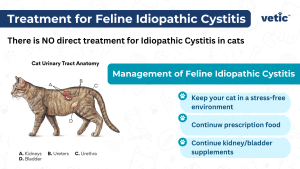
FIC Causes and Management
Quick disclaimer: I’m a Certified Cat Behaviorist, not a veterinarian. The following reflects what I’ve learned through experience; always consult your vet for medical diagnosis or treatment.
To resolve any medical problem, you eliminate possible causes until you find the source. A UTI’s cause = bacteria → antibiotics. Simple. But FIC has no quick cure. You can, however, manage inflammation and prevent painful flare-ups.
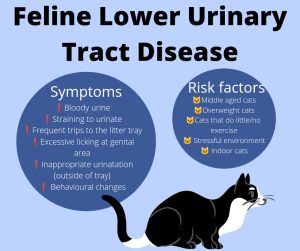
Stress and FLUTD in Cats
Stress is one of the biggest triggers. Some cats are naturally more anxious; others react to changes like a new pet, loud noises, or illness.
Keep a calm household:
-
Speak softly and avoid yelling across rooms.
-
Play calming music.
-
Use safe calming supplements or pheromone diffusers.
-
Provide hiding spots and vertical spaces so your cat feels secure.
A relaxed cat is a healthy cat — and far less likely to develop FLUTD flare-ups.
Treating FIC Flair-Ups
 While there’s no permanent cure for FLUTD in Cats, you can manage symptoms and reduce recurrences. Rita and I always look for safe, natural aids for our sanctuary cats.
One favorite is Palmitoylethanolamide (PEA), a compound found naturally in foods like peanuts and egg yolks. Studies show PEA can:
-
Reduce inflammation
-
Relieve pain better than NSAIDs
-
Support joint, dental, and bladder health
-
Even fight microbes naturally
Many humans take it for autoimmune disease or arthritis — and yes, Rita takes it too 😹.
The PEA supplement we use comes from The Two Crazy Cat Ladies, Jae and Adrienne. You can check out their PEA for Cats here. One bottle lasts about 75 days for a single cat and comes with a tiny spoon for perfect dosing.
If Your Cat Keeps Peeing Outside the Litter Box
 If your cat repeatedly urinates outside the box, schedule a veterinary exam first. If nothing medical is found, or if FIC is diagnosed but the behavior continues, you may be dealing with a learned habit.
That’s where a Certified Cat Behaviorist (like me) can help. Once the pain is managed, we can retrain your cat to trust the litter box again through gentle, positive behavior modification.
👉 Learn more in my article: Cat Pees Outside the Box — Why It Happens and How to Stop It
Need Help Solving Your Cat’s Behavior Problems?
Book a private consultation with Rita Reimers, Certified Cat Behaviorist.
Book a Consultation

Leave a Reply