Successful cat introductions do not always end with two cats curled up together. Some cats become best friends, while others simply learn to share their home peacefully without stalking, guarding, or fighting. Knowing what peaceful coexistence looks like will help you recognize when the introduction process is truly complete.
by Rita Reimers, Cat Behaviorist
 How to Tell When the Introduction Process is Complete
What Do Successful Cat Introductions Look Like?
When introducing cats to each other, it’s easy to scrutinize every hiss, swat, stare, or growl. Sometimes you might wonder whether you’ve just taken three steps backward. Many people also have an image of what introduction success is supposed to look like.
If you are still working through the introduction process, begin with my complete guide, Introducing Cats: A Step-by-Step Guide.
The ideal is the image of two cats curled up together, grooming one another, and becoming instant best friends. Yes sometimes cats DO become friends. But other times, peacefully coexisting in houses is as far as it goes.
Also refer to my article Are My Cats Playing or Fighting for more ways to tell if introductions are now complete.
Do Successful Cat Introductions Always Lead to Friendship?
 Most people believe successful cat introductions mean that everyone becomes friends. The vision most people see is cats that are laying together in the sunshine, playing together, chasing butterflies, grooming and napping on each other, and perhaps even sharing a food dish.
Of course that is what we all wish for, but I like to start my behavior sessions by adjusting that expectation a little. Peaceful Coexistence is the realistic goal; anything more I consider to be a bonus, the cherry on top of the cake.
What is Peaceful Coexistence?
 Peaceful coexistence means the cats can share your home without stalking and/or attacking one another. The reason I look at this as the goal is simply so we can establish a quiet, non-threatening environment for both cats and humans alike. Security and tolerance are the goals.
Think of your own friendships with people. Chances are, the people who are your closest friends once invoked curiosity, maybe some fear, definitely observation was necessary for you to feel comfortable around them. All those phases come before taking a chance to get to know people on a deeper basis. Well, it’s the same with cats.
Sometimes those people you’ve been casually acquainted with do become your friends later, some stay just acquaintances that you see but don’t have any deep attachment to or do activities with.
With those people, you have a relationship of peaceful coexistence, perhaps because you are in the same friend group or take the same class.
 Peaceful Coexistence – Introduction Success Examples
How do you know peace has been achieved and you can stop integration steps? If your cats do these things, they are comfortable enough to live together even if they are not bonded:
- Be in the same room while doing separate things
- Walk past one another without confrontation
- Eat comfortably within sight of one another
- One cat disengaging and the other allowing it
- Relaxed sleeping or resting in the same general area (or even the same sofa or bed)
- Using litter boxes and other resources without guarding
- Recover quickly after a disagreement
- Choose to approach one another again without aggression
How Cats React to New People, Cats, and Others
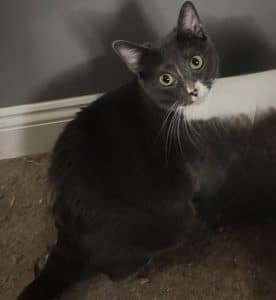 When cats approach a new situation, new person, cat, dogs, etc, they do so in a very methodical way. As you may know, cats tend to be more cautious than other animals, since in nature they are both predator and prey.
The first two steps of my SOS Method introductions address that initial fear they feel by desensitizing them to one another, and letting them begin to trust that the other cat isn’t going to hurt them.
However once we get into the same room, other instincts take over as the cats attempt to establish boundaries, hierarchy, and decide just how friendly they will be with one another. Understanding how cats communicate this information to each other will help you know when to, and when not to, intervene.
Cat-to-Cat Communication
Bringing cats together in the same room is the hardest part for my clients. It’s scary for people to take that step, especially if these are your first cats or the first time having more than one cat at the same time.
Cats clearly communicate with one another by means that may look menacing to us. But for cats, this is how they begin to take those first steps toward building peace and trust, and maybe even friendship. Let’s talk about how cats communicate with one another.
How Cats Set Their Boundaries
 Cats communicate with each other through sounds, body language, and sometimes physical contact. Cats tell one another “back off,” “you’re too close,” or “I’m not sure about you yet” using a swat or two.
And that’s ok. Well-meaning family members often come to the “aid” of the cat being swatted, and sometimes even scold the swatter. Both actions can impede their progress.
Here are a few guidelines:
- If one cat swats and the other backs off, that is ok and a perfectly normal way cats establish boundaries
- Should the cat continue advancing on the other cat’s space despite a clear signal to stop, then it’s time to separate the two cats. (PLEASE Read my article Separating Fighting Cats for guidance on how to safely separate them).
- Watch the cats for signs that wrestling has turned to play. Even then sometimes one cat wants to stop before the other one. If one cat has been pinned down and is struggling to get out from under, it’s time to end the playtime
- If you aren’t sure if it’s play or fighting, look at their body language. Ears back, bottle-brush tail, fur on the back standing on end are indicators that things have gone too far.
Sounds That Cats Make and Why
Sometimes the sounds cats make when meeting or when play goes too far can be more frightening than what is actually going on.
 Why is that? Well, cats would rather not engage in a physical altercation if they can avoid it. So often their sounds are exaggerated to scare the other cat into retreating.
There is actually a hierarchy to the angry sounds cats make:
Hiss, Growl, Snort, Yowl, Scream, Spit
It’s wise to stop encounters before they get to the snort stage if at all possible. Hiss and Growl = Fear. You can comfort them through the fear with soothing talk. This is normal, and is a warning to the other cat back off.
Most cats will respect the warning; like I mentioned, no cat really wants a physical fight to happen.
Successful Cat Introductions Vs Unsuccessful Ones
Now your cats have begun to show indications of desensitization and are largely calm when they are separated by a see-through partition. Or perhaps they are even reaching under the doorway to initial play. Marvelous! We are now ready to move to getting them into the same room to see where they stand with one another.
A Slow and Steady Pace = Successful Cat Introductions
 Successful Cat Introductions are done in stages, starting with short periods of time spent in the same zone of the home at the same time. It’s not a good idea to plop one cat in front of the other and let them “work it out” between them. Yes I have seen that approach and I highly discourage it.
Yes they DO need to work some things out that you cannot do for them, but gradually. Let them get used to seeing each other without a partition but be close by in case things go sideways at first, and they may. Usually one cat is more enthusiastic about meeting than the other one, so be sure to take that into consideration.
Hovering = Possibly Starting Over
 Hovering over the cats when you get them into the same room may cause integration setbacks. Think of how cats act in the wild. When their leader cat is calm, they are calm. If their leader cat senses danger, the other cats pick up on it and act accordingly. Meaning, if your actions are conveying anxiety and fear, then they will act as if there is danger afoot.
An example of this came to light when a client from a few years ago sent in a video of their first session with the two cats in the same space.
It did not go well, simply because cat dad was tapping his foot and hovering the entire time, which made his cat nervous. In fact she was so nervous that she knocked over the baby gate that he had rested in the hallway and it made such a racket that both cats ran to hide.
Celebrate the Small Wins
 I have a client who has actually had wonderful success during the introduction of her cat to her new kitten. She had come to realize that every interaction that looks negative to her is actually just the cats getting to understand one another. A hiss there, a jump at the screen in play there, all looked like failure to her.
It was not failure at all. The cats are simply starting to become interested in play with one another, but of course they are still being cautious. I had to remind my client of where she started from with these cats compared to how their relationship has progressed to where it is now.
We’re ready for supervised same-room sessions, which is the final step on the road to a very successful completion of cat introductions.
Try Not to Judge Introductions by Just One Interaction
 Try not to judge the future of the relationship between the cats by one interaction. Remember that the cats are working against many instincts they have that in nature serve them well and allow them to survive.
Repeated positive interactions between the cats will help them lower their anxiety and slowly build a relationship that will enable all of you to live together in peace. I live with 15 cats, and while we have no fighting, they don’t all love everyone. Some peacefully coexist, some lay all over each other, and some relationships have changed over time to become friendships. ALL of these are examples of Successful Cat Introductions.
Remember – the goal of cat introductions isn’t to decide what kind of relationship your cats should have. It’s to give them the time, space, and security to decide that for themselves.
Tried the Advice and Still Having the Problem?
You can read all the cat behavior advice in the world, but your cat, your home, and your situation are unique.
Stop guessing. You need Rita.





 Put Your Cat on the Analyst's Couch
Leave a Reply