by Rita Reimers, Multi Cat Behavior Expert
In this 4-part series, Rita discusses the various ages of cats and how to choose the right one for you!
Part 3 – Adopting Adult Cats: Middle-Aged Cats

Adopting adult cats might be the PURRfect choice for you. They are already settled, litter trained, and in desperate need to give and receive love.
Not up for the high energy of a kitten or adolescent cat? Then adopting an adult cat may be the perfect solution for you and your family. With so many kittens available, older adult cats often get overlooked even though they are the perfect choice for busy families.
Some of adult cats who are available for adoption have grown into adulthood while at rescues and shelters, their sibling long ago adopted. Others are cats that have been given up for adoption by their owners for various reasons. No matter why they are there, some pretty fabulous adult cats are at rescues and shelters across America just waiting for their forever home.
If your cat’s behavior is becoming stressful or difficult to manage, it may help to get professional guidance tailored to your situation.
Adult Cats Make Great Pets
What’s wonderful about adopting an adult cat is what you see is pretty much what you get. Their personalities are pretty well set, there’s none of that non-stop energy those baby kittens have, no biting your toes through the blanket at night, no need to kitten proof your house. Adult cats aren’t constantly getting into everything as they explore everywhere. And they already know how to use the litter box, too!
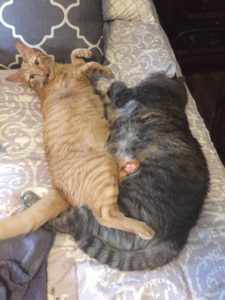
A friend of mine recently adopted a stray adolescent cat she had been feeding outside in her backyard. She already had two cats and a dog inside, so naturally she was a little concerned about adding this new cat to her household. After taking the cat (whom she named Allister) to the vet to make sure he was healthy, she brought this 8-year-old boy into her home and introduced him to her other pets. It took them about one minute of sniffing for them to welcome Allister into his new family.
Choosing Your Adult Cat
At this stage of life, we do still see those same three distinct personality types (high intensity, low intensity, and shy) in the adult cats as we do in kittens. However, the constant hyperactivity is pretty well gone, and the adults have already been through the process of learning how to socialize.
Begin by taking your potential adoptee to a quiet room at the rescue or shelter, where you can get to know one another. If he interacts well with toys and chases them around without hesitation, this is probably one of those former high intensity kittens and he is now a confident and self-assured adult adventurer. This is a cat that needs mental and physical stimulation from toys, cat trees and other places to climb, and also perhaps a playmate or two in addition interaction with you. He should also be comfortable with you touching and petting him, and perhaps sitting or snuggling on your lap once he gets to know you better.
An adult cat that purrs and rubs against you immediately and wants to be held or sit on your lap almost right away is more of a low intensity adult cat. These are often the lovers and snugglers. They may also enjoy some spirited play but largely just want to be close to you or curl up and snooze. Adult cats still play with toys on occasion and will enjoy climbing up a tall cat tree. But their favorite place will most likely be at your side or on your lap.
Shy Cats Need Extra Time

Shy cats will be the nervous ones who shake or hide when you try to interact with them. However, not every adult cat that appears to be shy is truly that way by nature. Remember that some of these adults may have suffered abuse, lost their homes, or lived in a cage for so long that they need time to warm up to you.
After you get him home, allow kitty time to acclimate. You will then discover that your cat actually has a high or low intensity, truly enjoying various levels of interaction, affection, and play.
My Experience Adopting Middle-Aged Cats

I myself have adopted many adult cats from both rescues and shelters, and they are all wonderful companions. My Abby was 5 years old the day someone returned her to the rescue where I was volunteering. In fact, it was my first day there. Abby was a Maine Coon, a breed that is known to be laid back and go-with-the-flow. In fact, when I took her home, I discovered that her vet misdiagnosed some medical issues she had. Once we got that under control, she became a very docile and loving kitty that all the other cats accepts. About a month later, I brought home 3 foster kittens, and she treated those kittens like they were her own.

While Abby was a low-intensity laid-back kitty, Hope was not. When I adopted 4 year old Hope, I knew right away that I had a shy scared cat on my hand. She had been in the shelter for quite some time, coming from an abusive situation. It took quite a long time for Hope to relax in her new home and learn to trust me. Even longer before she trusted the other cats to get near her. Hope is now a sweet, loving cat. She interacts with a select few of the other cats in our household and loves it when we brush and pet her. Sometimes, Hope will even get involved with some spirited playtime with the other cats.
I have never regretted adopting adult cats.
Loyal Cat Companions

Adopting Adult Cats is Special. Whichever adult cat you decide to adopt, it may take some time to establish a relationship and bond with them. Develop a routine with your cat to ensure you give him plenty of attention and playtime. This activities will help your new cat learn to trust you and his surroundings.
Once he decides to give you his love, you will have an unbreakable bond that will last a lifetime.

Leave a Reply