Cat Spraying – Urine Marking
Basic Signs • Common Causes • When to Get Professional Help
“My cat is spraying, even though he’s neutered.”
“My female cat is spraying—do they really do that?”
These are some of the most common questions I hear.
The truth is, any cat can spray when they feel scared, anxious, or territorial. While un-neutered males are the most likely to spray, all cats, regardless of sex or spay/neuter status, can develop this behavior when they feel stressed or unsafe.
Is It Spraying or Peeing?

It can be hard to figure out whether your cat is spraying or simply urinating, especially if you discover the wet spot long after it happened. The distinction is an important one, since these two behaviors often come from very different motivations.
Knowing which one you’re dealing with is the first step toward solving the problem.
How to Tell the Difference

If your cat is squatting and leaves a puddle on a horizontal surface, they are urinating outside of the litter box.
However, if your cat is standing upright, shaking their tail, and leaves a small amount of urine on a vertical surface with drip marks running down, then you’re dealing with spraying, also known as urine marking.
Spray has a strong, musky odor that is noticeably different from regular urine.
👉 If you are indeed dealing with peeing instead of spraying, reviewing my Litter Box Problems Guide would be a good place to start.
Rule Out Medical Issues for Cat Spraying First
Before calling a behaviorist, it’s important to rule out any underlying medical causes. Providing your veterinarian with an accurate description of your cat’s behavior will help determine whether the issue is medical or behavioral.
While spraying is typically a behavioral response, some medical conditions can lead to inappropriate urination that may be mistaken for spraying.
Common Medical Causes of Urine Marking Include
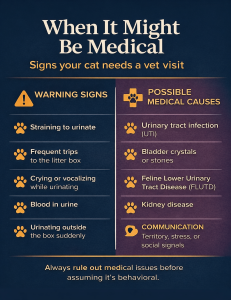
Bladder Crystals or Stones
Can cause painful blockages, especially in male cats.
Kidney Disease
Increased urine volume may overwhelm normal litter box habits.
Urinary Tract Infection (UTI)
Pain during urination can make the litter box feel unsafe.
Feline Lower Urinary Tract Disease (FLUTD) or Cystitis
Often stress-related, this can cause urgency and repeated attempts to urinate.
⚠️ Important: Rule Out Medical Issues First
If your cat is urinating outside the litter box, always rule out a medical issue before assuming it’s behavioral. Conditions like urinary tract infections, bladder stones, or kidney disease can cause pain and changes in urination.
If you notice sudden changes in your cat’s bathroom habits, consult your veterinarian first.
Reasons a Cat Might Urine Mark

Once medical issues have been ruled out, it’s time to figure out the reason behind your cat’s behavior. Spraying is almost always rooted in anxiety and insecurity.
Let’s take a look at some of the most common triggers for urine marking:
Territorial Marking
Cats spray to claim and protect their territory. The presence of community cats outside, or the addition of a new cat or other pet in the home, may trigger spraying as a way to warn others away.
Self-Soothing
A stressed or anxious cat may spray near objects that smell like their human as a way to comfort themselves.
Environmental Changes
Changes such as moving, renovations, new furniture, or even shifts in daily routine can create anxiety and lead to spraying.
Mating Behavior
Intact cats spray to advertise their presence and reproductive availability. Even if your cat is spayed or neutered, the presence of outside cats in heat can create tension and trigger spraying indoors.
Multi-Cat Household Tension
Lack of resources, whether real or perceived, as well as conflict between cats, can lead to stress and spraying.
Social Signaling (Often Misunderstood as “Dominance”)
Cats may spray to communicate about space and social relationships with other cats. This is less about “dominance” and more about managing conflict and creating distance.
How to Stop Cat Spraying
Address the Underlying Cause
Cleaning the mess left by a cat spray isn’t enough. You need to address the reason your cat is spraying in the first place.
Go back to the common triggers we discussed earlier, whether it’s stress, territorial behavior, or changes in the home. Once you identify the “why,” you can start making changes that actually stop the behavior instead of just reacting to it.
Reduce Stress and Anxiety
Stress is one of the most common drivers of spraying, so lowering your cat’s overall stress level can make a big difference.
Focus on:
- Keeping a consistent daily routine
- Providing safe, quiet spaces where your cat can retreat
- Making sure resources like food, water, and litter boxes are easy to access
Even small changes here can help your cat feel more secure and less likely to mark.
Manage Territory and Outside Triggers
If your cat feels like their territory is being threatened, they may spray to reinforce it.
This can include:
- Blocking visual access to outdoor cats (windows are a big one)
- Managing scents coming into the home (from other animals, people, or items)
Sometimes the trigger isn’t obvious, but your cat is reacting to something you can’t see.

Clean Marked Areas Properly
If a spot smells like urine to your cat, they’re likely to return to it.
Regular cleaners don’t fully remove the odor, even if it smells clean to you. That’s why it’s important to use an enzyme-based cleaner, which breaks down the urine at a molecular level.
If the scent remains, your cat may continue to mark the same area.
Support Multi-Cat Harmony
In multi-cat households, spraying is often related to tension between cats, even if it’s subtle.
Make sure you have:
- Enough litter boxes (generally one per cat, plus one extra)
- Multiple feeding and water stations
- Plenty of vertical and horizontal space
Reducing competition helps cats feel more secure and less likely to mark.
When to Get Professional Help for Cat Spraying
 If you’ve made changes and the spraying is still happening, it may be time to get additional support.
Consider professional help if:
- Spraying continues despite your efforts
- Multiple cats are involved
- The behavior is getting worse
- You’re feeling overwhelmed trying to manage it
This is where a behaviorist can help identify the root cause and create a plan tailored to your specific situation and home.
You’re Not Alone, This Can Be Fixed
Spraying can feel frustrating and overwhelming, but it is a solvable problem. With the right understanding and approach, most cats can return to appropriate behaviors.
If your cat is still struggling, a personalized plan can make all the difference. I’m here when you’re ready.