Introducing Cats and Babies Successfully – 7 Tips
by Rita Reimers, Multi Cat Behavior Expert
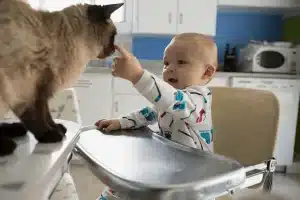 Congratulations, You’re Expecting!
You’re having a baby, and everyone is so happy and excited. But, what about the cat? Is there going to be a problem between the cat and the baby? Will my cat get jealous?
Relax, you won’t have to re-home your cat. Introducing cats and babies just requires some careful planning before the baby is even born, then some patience to ensure a smooth and positive transition.
Here are our 7 Tips to help you introduce your cat to your new baby. Hey, they may even become best friends!
1. Prepare Your Cat for Meeting the Baby
 Gradual Changes to Keep a Cat Cool When Introducing Cats and Babies
- Environmental Adjustments: If you need to change your cat’s environment before the baby comes, (e.g., moving their bedding, toys, food, or litter box), do so gradually to minimize stress. Move it just a little each day, until it’s exactly where you want it and the cat still knows where to find it.
- Nursery Setup: Allow your cat to explore the nursery before the baby arrives. Use baby gates or temporary screen doors if necessary to create boundaries. We love this screen door, which stands up to cat claws and requires no drilling to install: Reinforced Cat Screen Door
Desensitize the Cat to New Sounds and Smells of the Baby
 Baby Sounds: Get your cat used to hearing a baby cry by finding a sound bite on YouTube, and play a few seconds of it for them. Say something like “is that the baby?” then shut off the sound and give the cat a treat. Gradually increase the length of time you play the cry until it no longer bothers the cat.
- Baby Smells: Use baby lotions or powders on yourself to help your cat become accustomed to the new scents.
- Baby Furniture: Rub a soft toy or cloth on your cat’s cheeks where those “happy hormones” are. Touch the cloth to any new furniture coming into your house, including the baby furniture, so kitty will think he has already marked it.
2. Maintain Your Cat’s Routine while Introducing your Cat and Baby
 Consistent Schedule: Keep your cat’s feeding and playtime schedule as consistent as possible to provide a sense of stability. It’s ok to play with your cat and talk to him when you get up to feed the baby, but try to avoid giving him food or treats. Otherwise, once the baby is sleeping through the night, your cat will be waking you instead!
- Regular Interaction: Spend quality time with your cat to reassure them they are still an important part of the family.
3. Introduce the Baby and Cat Gradually
 First Few Introductions of Cat and Baby
- Before Baby Comes Home: Prepare for introducing cat and baby by first packing a receiving blanket to take to the hospital with you. Wrap your blanket around the baby, and when your partner is ready to go home for the evening, unwrap the baby and give them the blanket. Take it home to your cat and lay it out. That way, your cat gets to smell the baby before they actually meet the baby person.
- The Baby’s Room: it’s a good idea to let the cats come into the baby’s room with you when you are in there with the baby. That way, the cats won’t feel shut out of that room when you put the baby to bed, since they will have spent time in it with you.
- Controlled Meetings: When you bring the baby home, let someone else hold the baby while you greet your cat to avoid anxiety.
- Calm Environment: Keep the initial introduction calm and quiet. Play some Music For Cats or other calming sounds to help set a peaceful tone. Allow your cat to approach the baby at their own pace.
 Positive Reinforcement to Encourage Good Behaviors
- Treats, Attention, and Praise: While introducing cat and baby, reward your cat with treats and praise when they exhibit calm behavior around the baby. Even some special playtime would be a great reward to make your cat feel seen and loved.
- Gentle Exposure: Gradually increase the time your cat spends near the baby, always supervising the interactions closely. Never leave a cat alone a baby because accidents happen.
4.  Create Safe Spaces for Kitty Away From Baby
- Cat-Only Areas: Ensure your cat has access to areas where they can retreat and feel safe from the baby’s reach, such as a tall cat tree or a soft blanket on top of the refridgerator.
- Elevated Perches: Provide high perches or cat trees where your cat can observe the baby from a distance. High shelving to climb that lead to cozy cubbyholes make the PURRfect places for your cat to retreat.
5. Monitor Interactions Between Cat and Baby
 Supervision: No matter how much you trust your cat, ALWAYS (and we mean ALWAYS!!) supervise interactions between your cat and the baby to prevent accidental scratches or bites.
- Body Language: Watch for signs of stress in your cat, such as flattened ears, hissing, or swatting, and intervene if necessary.
6. Address Your Cat’s Behavioral Issues
 Training Your Cat
- Redirection: If your cat exhibits negative behavior towards the baby during introductions or just in general, gently redirect the cat’s attention to a toy or treat.
- Avoid Punishment: Do not punish your cat for showing curiosity or mild irritation towards the baby. Use positive reinforcement and distractions to encourage desirable behaviors.
Seek Professional Help if Needed
- Veterinary Advice: Consult your veterinarian if your cat shows significant stress or aggression towards the baby.
- Behaviorist: A certified animal behaviorist can provide specialized training and techniques to help your cat adjust.
 7. Long-Term Cat and Baby Relationship
- Routine Maintenance: After introducing cat and baby, continue to maintain a consistent routine for your cat to ensure they feel secure.
- Ongoing Attention: As your baby grows, teach them to respect the cat’s space and interact gently.
- Reinforcement: Keep rewarding positive interactions between your cat and the baby to foster a harmonious relationship.
Cat and Baby: Life-Long Best Friends
Introducing cats and babies requires preparation, patience, and consistent positive reinforcement. By gradually acclimating your cat to the new sounds, smells, and routines, you can help them adjust to the changes.
Remember to monitor interactions closely and seek professional help if needed. With time and effort, your cat and baby can develop a peaceful and loving relationship. You cat and your baby may even become life-long best friends!
Need Help with Your Cat’s Behavior?
Rita Reimers provides judgment-free virtual cat behavior consultations for litter box issues, aggression, introductions, anxiety, and more.
Book Your Private Session with Rita
Leave a Reply