Why Some Cats Have Food Insecurity
Written by Cat Behaviorist Rita Reimers

Food Aggression in Cats, also known as Food Insecurity, is fairly common. If your cat eats too fast, steals food from you or your other cats, begs constantly, or seems obsessed with anything you’re eating, you may be dealing with food insecurity.
This isn’t a “bad cat behavior” problem. It’s usually rooted in your cat’s past experiences with lack of food or shelter.
What Is Food Aggression in Cats?
Food aggression and insecurity happens when a cat has experienced a time in their life when food was not reliably available.
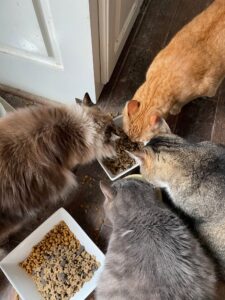
Many of the cats I work with come from situations such as:
- Living outdoors and scavenging for food
- Competing with other animals or littermates
- Hoarding situations
- Being part of a litter that simply didn’t have enough to eat
Because of this, these cats learned that food could disappear at any moment.
Common Signs of Food Insecurity
Cats dealing with food insecurity may:
- Eat very quickly (“scarf and barf”)
- Beg constantly when people are eating
- Jump on counters or tables to access food
- Steal food from other cats
- Guard food or act aggressively around feeding
It can feel like they’re always hungry, even when they’re getting enough to eat.

Why It Happens
From the cat’s perspective, their behavior makes perfect sense.
If food wasn’t always available in the past, their brain is wired to:
- Eat as much as possible, as quickly as possible
- Take advantage of any opportunity
- Compete when needed
It’s as if they believe the food in front of them might be their last — and at one point in their lives, that was true.
How to Help a Cat with Food Insecurity
In my work with multi-cat households, this is one of the most common issues I see. Helping a cat through food insecurity takes time and consistency. In many cases, the goal isn’t to completely eliminate the behavior, but to help the cat feel safe and confident that food will continue to be available.
Once a cat becomes more secure, stealing food, eating too fast, and table-side begging should become a rare occurance.
Slow Down Fast Eaters
For cats that “scarf and barf,” slowing them down is key.

Using a lick mat for wet food forces the cat to work at getting the food out, which naturally slows their eating. This also helps in multi-cat households by giving other cats a chance to eat without being rushed.
For dry food, using slow feeder bowls and treat balls not only slows eating down, but will also provide some mental and physical stimulation. Using these items mimics the hunt for food and makes your cat’s mealtime more satisfying.

Create Predictable Feeding Routines
Feed at consistent times each day so your cat learns that food is reliable and not scarce. When feeding wet food, it’s important to provide each cat with his or her own bowl of food. Expecting many cats to share one bowl or plate, no matter the size, is a recipe for meal time chaos.
Stop Reinforcing Begging and Stealing
Never feed your cat from your plate or while you’re cooking.
If needed, place the cat in another room while you prepare food until they learn that the kitchen is not a feeding area.

If you want to give treats, set them aside and wait until after your meal is finished and the kitchen is cleaned up. Then give the treat in their bowl, using a consistent phrase like “treat time.”
Be Consistent with Boundaries
If your cat jumps up while you’re eating, calmly place them back on the floor and use a consistent cue like “off” or “no.”
You may have to repeat this many times at first, but over time your cat will learn that there is no reward for that behavior.
One helpful exercise is to sit with an empty bowl while relaxing (for example, watching TV). Let the cat investigate, and consistently remove them if they jump up. Once they learn there is no payoff, the behavior decreases.
Redirect with Enrichment

Give your cat a better outlet for their food motivation.
You can:
- Offer treats on the floor away from your eating space
- Use a treat ball to dispense kibble gradually
- Provide puzzle feeders to engage their natural hunting instincts
This not only redirects their attention, but also provides enrichment and satisfies their natural hunting instincts.
Food Aggression in Cats Doesn’t Just “Go Away”
In many cases, food insecurity doesn’t completely disappear.
Instead, your goal is to help your cat feel safe, reduce anxiety, and build trust that food will always be available. Over time, most cats can learn to relax — even if that early survival instinct never fully goes away.
When to Get Help
If your cat’s food-related behavior is creating tension in your home, especially in a multi-cat household, this is something I help with in consultations.
Need Help Solving Your Cat’s Behavior Problems?
Book a Cat Behavior Session with Rita Reimers and get a personalized plan to resolve your cat’s behavior issues.
Book a Cat Behavior Session

Leave a Reply