Preventing Feline Whisker Fatigue
by Rita Reimers, Multi Cat Behavior Expert
Updated for 2026
Feline whisker fatigue is a real thing, and it’s more common than you might think.
If your cat paws food out of their bowl, seems hungry but won’t eat, or avoids their dish altogether, whisker fatigue could be the reason.
Cats are known for their grace, agility, and, of course, their glorious whiskers. These magical face-fibers do more than just look adorable; they help your cat navigate the world with precision. But did you know that even whiskers can get tired?
What Exactly is Feline Whisker Fatigue?
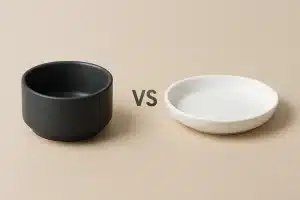
Feline whisker fatigue happens when a cat’s whiskers are overstimulated. Since whiskers are packed with nerve endings, they’re incredibly sensitive. Cats use them to detect changes in their environment, like squeezing into tight spaces or sensing nearby objects.
While whisker fatigue isn’t formally recognized as a medical condition, many cats show clear preferences for shallow dishes and reduced whisker contact during feeding.
But when those whiskers are constantly rubbing against things, like the sides of a food bowl, it can overwhelm their sensory system.
Imagine wearing super-sensitive, extra-long eyelashes that constantly brush against objects. Annoying, right? That’s whisker fatigue for your cat.
Signs Your Cat Might Have Feline Whisker Fatigue

If your cat is experiencing whisker fatigue, you may notice some common behaviors. Not sure if your feline friend is feeling whisker-weary? Here are some signs to look out for:
- Reluctance to eat: Your cat approaches the bowl, looks at it, then walks away
- Messy eating: Pawing food out of the bowl or eating from the floor to avoid contact
- Irritability: Acting unusually moody or aggressive, especially around mealtime
- Head shaking: A quick shake after eating, possibly from sensory overload
How to Prevent Whisker Fatigue in Cats
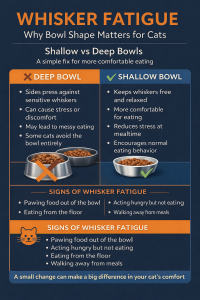
Luckily, whisker fatigue is easy to fix. It mostly comes down to adjusting how your cat eats and drinks:
- Switch to shallow bowls: Choose wide, shallow bowls that don’t touch your cat’s whiskers. There are even special “whisker fatigue” bowls designed just for this purpose. Here is a good example: CatGuru-Feeding-Station-Raised-Elevated
- Plate it Up: You can serve your cat’s food on a flat plate or saucer to eliminate the chance of whisker irritation. I like these wheat grass plates, since they are shallow and also eco-friendly: Small Wheat Straw Dishes or Large Wheat Straw Plates
- Raised Bowls: Cats can also benefit from raised bowls that can reduce both neck strain and whisker fatigue. These Elevated Cat Bowls are PURRfect for this.
- Keep It Clean: Clean your cat’s bowls regularly to ensure there’s no residue that might cause additional discomfort.
Keep Those Feline Whiskers Fatigue Free

Whisker fatigue might sound like a fancy cat ailment, but for our furry companions, it’s very real—and very fixable.
By making a few small changes, you can help your cat stay comfortable, eat with ease, and keep their whiskers fatigue-free.