Changing the Stereotype
by Rita Reimers, a Self-Described Cat Lady
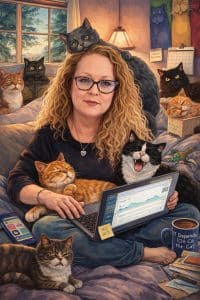
People like to laugh and make fun of cat ladies, including the President and Vice President. But from where did the cat lady stereotype originate? and Why?
What people think a cat lady is, or was, is far from the truth of what today’s modern day cat lady is all about.
Let’s look at a little history behind the moniker.
What Is a Cat Lady?
The term Cat Lady was coined back in the 1930’s. While often portrayed as a figure of ridicule or pity in popular culture, she is also seen as a harmless, nurturing figure dedicated to animals.
Back when women were supposed to be dependent and submissive, the cat lady was the antithesis of the 1930’s woman: Independant, Rebellious, Childless, Isolated, Lonely, Spinster. These are words typically ascribed to women who lived alone and nurtured animals, usually cats, as their companions. And none of them were meant to be flattering.
An Unhappy Existence?
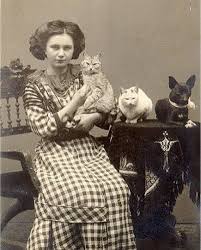 As time went on, other negative attributes were also attached to cat ladies. Usually they were seen as being mean, unhappy, and socially isolated by choice. Later, the term was used as a common phrase describing a women who was poor, single, and who lived in squaller with many cats, the majority of whom were breeding continuously.
If this was an accurate stereotype or not, the picture was painted. Woman who lived with cats were viewed as an object of pity, who did not always act in the best interest of her cats. Therefore, she was someone to be avoided.
Some Famous Cat Ladies
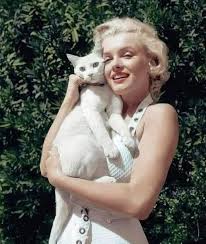 There were, however, some famous and notable cat ladies back in the day.
Did you know these accomplished, well- respected women were cat ladies?
- Edith Head
- Betty Davis
- Harriet Beacher-Stowe
- The Bronte Sisters
- Florence Nighteninggal
- Vivien Lee
- Marilyn Monroe
- Julia Child
I would hardly describe any of these women as isolated, lonely, unaccomplished, unkempt, living in squaller. Perhaps the tide was already turning, and the image of the Cat Lady was changing.
But, Was it Really?
Why the Cat Lady Stereotype Persisted
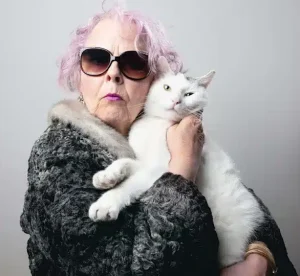 Changing the image people conjure when hearing the term ‘Cat Lady’ has not been easy. Here are a few of the stumbling blocks that keep the negative stereotype alive:
- Independent women have historically made society uncomfortable. Writers often portrayed women who chose to live outside traditional expectations as strange, lonely, or unhappy.
- Popular culture reinforced the stereotype for decades. Television, movies, and comedy frequently portrayed cat ladies as isolated, eccentric women living in cluttered homes surrounded by cats.
- Women who chose pets over traditional family structures were often judged harshly. Some viewed choosing not to marry or have children as failure rather than a personal choice.
- Living alone was often mistaken for loneliness. In reality, many women living with cats were independent, fulfilled, nurturing, and deeply connected to both animals and people.
- Cats themselves were misunderstood. Unlike dogs, cats have often been associated with mystery, femininity, rebellion, and even witchcraft, which helped fuel negative stereotypes surrounding the women who loved them.
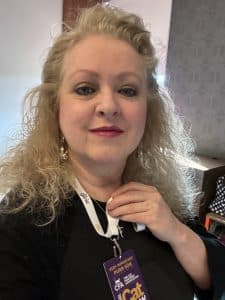
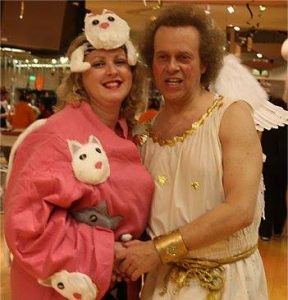 Even I have perpetuated the image that the media depicts as the “Cat Lady.” Here is a photo of me dressed as a Cat Lady for a Halloween party at Slimmons, Richard Simmons’ exercise studio.
Yes it was all in fun, but it was also a reinforcement of the image we’re trying so hard to erase.
Who is the Modern-Day Cat Lady
Today’s modern day cat lady is not like the stereotypical depiction, and perhaps she never truly was in the first place. Defining what a cat lady really is, let me go through some of the qualities often associated with her image.
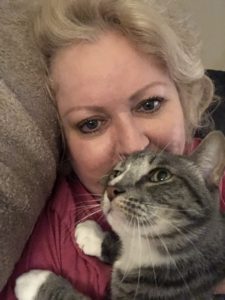 Yes some of them still hold true, but not in the old-fashion sense:
- Single (aka Spinster) – not always
- Pitied – no
- Nurturing – yes
- Independent – yes
- Rebellious – sometimes
- Childless – sometimes
- Isolated – no
- Lonely – no
- Mean – no
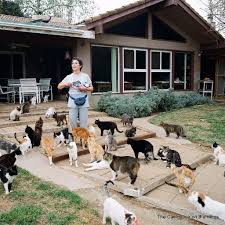
And let me add a few new ones:
- Enterprising – yes
- Smart – yes
- Empowered – yes
- Resilient – yes
- Socially Aware – yes
People know today’s cat ladies for more than just their love of cats. They are also making positive changes in how our society as a whole views cats and cat ladies alike.
These ladies are also making positive environmental changes that are of benefit to us all.
Social Benefits Courtesy of the Modern Day Cat Lady
Women in feline welfare are often the people quietly holding together huge parts of the feline wellness infrastructure. Furthermore, their dedication to the cause often results in major improvements to our own environment.
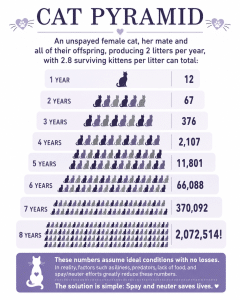 Here are a few ways the Modern-Day Cat Lady shines:
TNR: Volunteers/Rescuers Trap, Neuter, and Return thousands of cats to their outdoor lives annually. This is an important statistic for a number of reasons. Experts estimate that one un-spayed female cat, having just 2 litters per year with 3 surviving kittens, is responsible for over 2 million cats being born. Spaying and neutering is the cornerstone of reducing the feral and stray cat population and the unnecessary suffering of cats who are without access to adequate food, water, or shelter.
Saving the Bird Population: One criticism often directed at outdoor cats involves their impact on wildlife. Bird lovers are in favor of TNR. The American Bird Conservatory states that domestic cats are the leading source of bird mortality in North America. It is estimated that Free-roaming cats kill an estimated 1.3 to 4 billion birds annually. Reducing the outside feline population via TNR reduces these numbers dramatically.
Feline Rescue: What happens to domesticated cats when people toss them outside, surrender them to shelters, or neglect or abuse them in their homes? This is again where the modern-day cat lady comes in. Countless shelter volunteers and rescue advocates work to reduce the number of cats who otherwise would not survive being homeless. These ladies work tirelessly to socialize them and find them new homes.
Education: At the center off all of the above, is education. Modern day cat ladies are educating the public about the plight of the cat, and what we can do to reduce the number of feral cats and kittens, is something everyone working in feline wellness takes very seriously. Many ladies have set up websites, workshops, and courses dedicated to educating the public about cats and their needs.
Modern-Day Cat Ladies Make Positive Changes in our Society
Countless wonderful cat ladies are saving lives, positively impacting their communities, and educating us about the plight of displaced and forgotten cats.
Cat Ladies I am Proud to Know
I had the honor of interviewing Lynnea Lattanzio of Cat House on the Kings on my podcast, 19 Cats and Counting, as well as a few others.
- Dr. Rachel Geller – All Cats All the Time
- Susan Spaulding – The Kitten Coalition
- Stacy LaBaron – Community Cats Central
- Susan Schrek – Saving Southern Kitties
- Cynthia Long Pace – The Sunshine Fund
- Margaret Tompkins – Tompkins Foundation for FeLV Advocacy
- Hannah Shaw – Kitten Lady
- Lynea Lattanzio – Cat House on the Kings
And there are many ladies who take part in feline advocacy on their own, on their own dime… I salute you all.
Do You Still Think the Cat Lady stereotype fits? Let’s change the narrative together, and acknowledge all current and past cat ladies who loved cats and worked hard to ensure their welfare.
The modern-day cat lady isn’t a punchline. She’s often the very person quietly saving lives, educating communities, and changing the future for cats everywhere.
Here’s to the Modern-Day Cat Lady.
Feel free to sing the praises of your favorite Modern Day Cat Lady in the comments!